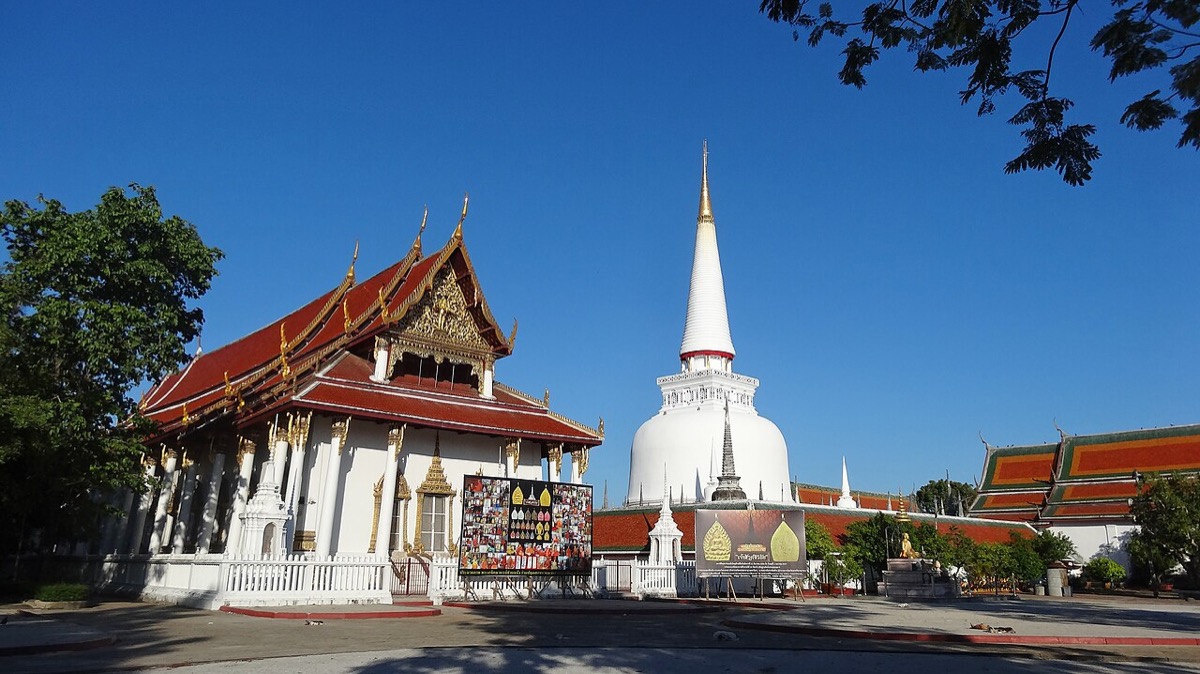
A temple organised around its main reliquary chedi
The temple centres on a large reliquary chedi topped in gold. UNESCO describes smaller chedis around it, with monastic living areas to its north and south. Rather than looking at the main tower and turning straight back, notice how the surrounding buildings are arranged around it.
The layout separates the central space holding the Buddha’s relics from areas where monks live. Worshippers still visit the chedi and monks still reside at the temple, so be mindful of religious activity and residents’ routes when taking photographs.
Traditions that travelled along maritime routes
UNESCO says the temple began in the 8th century and developed into a Buddhist centre for the region. Religious and architectural traditions arrived through trade networks between the Pacific and Indian oceans, from northeast India, Java, Sri Lanka and the Mon region of southern Myanmar.
Influences from Brahmanism, Hinduism, Mahayana Buddhism and Theravada Buddhism remain in the temple’s buildings, ceremonies and culture. As you look around the chedi and surrounding structures, consider how maritime routes brought different religious and architectural traditions together. The temple offers a way to explore that history of exchange in the south of Thailand.
A chedi wrapped in cloth and a World Heritage site
The temple was inscribed on the UNESCO World Heritage List in 2026. The heritage value includes living culture, such as the annual ceremony of wrapping the main reliquary chedi in cloth, Nakhon Si Thammarat’s chronicle tradition and the Nora dance-drama.
If you want to see a related ceremony, check the event information for that year separately. World Heritage status does not mean every hall is open to tourists all the time. Where a ceremony or temple activity is taking place, follow on-site guidance and give worshippers space.