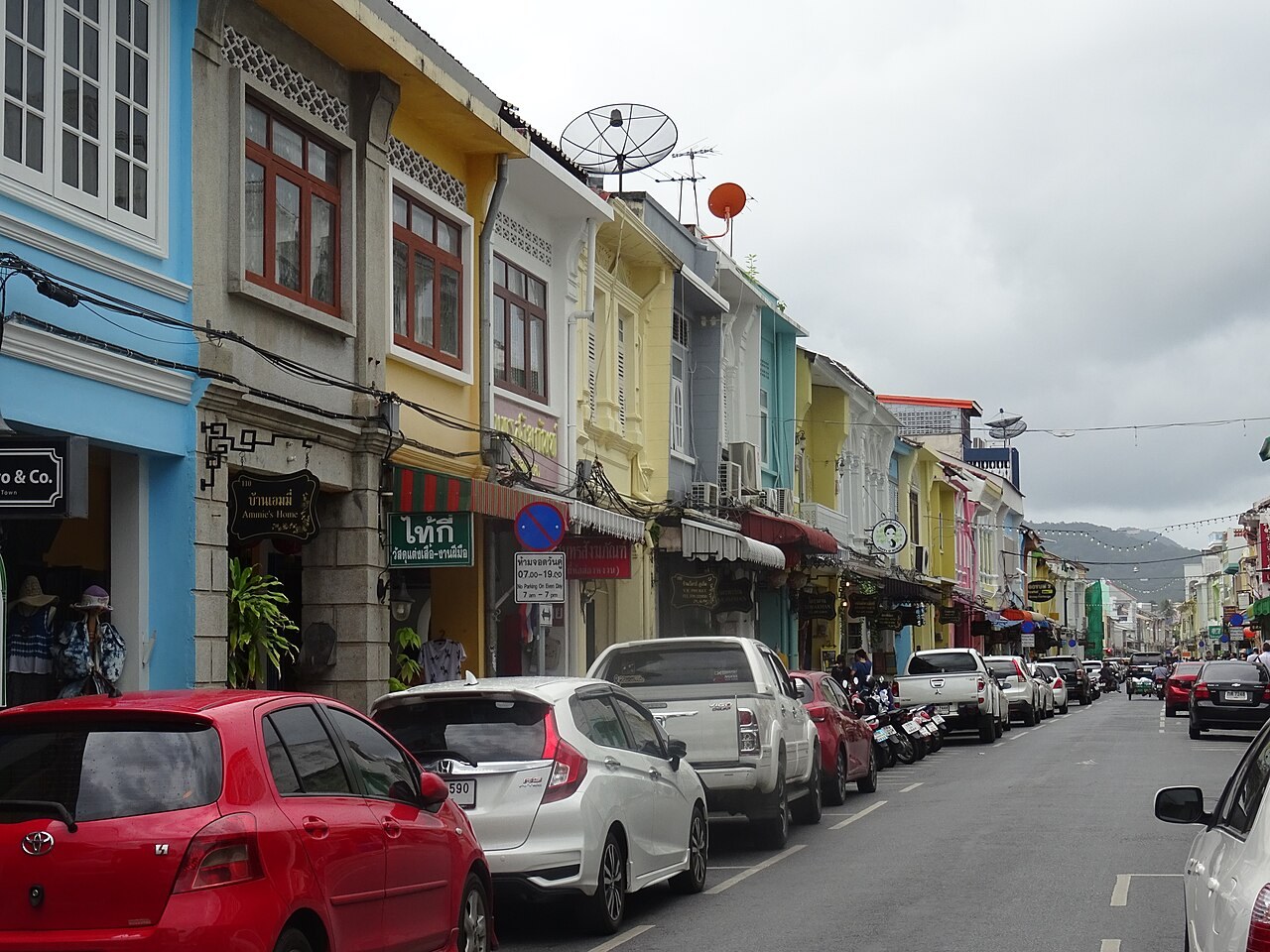
Shophouses from the tin-mining era
Shophouses and mansions built when Phuket prospered through tin mining remain in the Old Town. Their façades show the history of the island, where Chinese migrants and Malay and Thai cultures met, in buildings combining commercial and residential uses.
The Sino-Portuguese buildings along both sides of the road show an urban commercial side of Phuket, different from its beach resorts. Some historic buildings are still used as restaurants, cafés and accommodation, bringing the street’s past and present together.
Thai Hua Museum and street murals
Thai Hua Museum on Krabi Road is a place to explore the history and heritage of Phuket’s Chinese community. The museum building itself is also one of the Old Town’s historic buildings.
After visiting Thai Hua Museum, return to the street to see shophouses, murals and businesses that are still open. Seeing the museum and the commercial street together shows how Old Town’s architecture extends beyond a single exhibition room.
From Hokkien noodles to o-aew
Phuket’s local foods include Hokkien fried noodles, o-tao, loba and o-aew. Some places serve dim sum and dumplings or khanom chin rice noodles with curry in the morning; apong is a snack you can try as well.
Tasting local dishes at restaurants in the old streets is one way to experience the food culture left by Phuket’s different communities. Lard Yai Market on Thalang Road is held on Sundays and is a separate event from the Old Town itself.