Wat Si ChumWat Si Chum (Sukhothai)วัดศรีชุม สุโขทัย

Sukhothai · Sukhothai temple ruin housing the Phra Achana seated Buddha

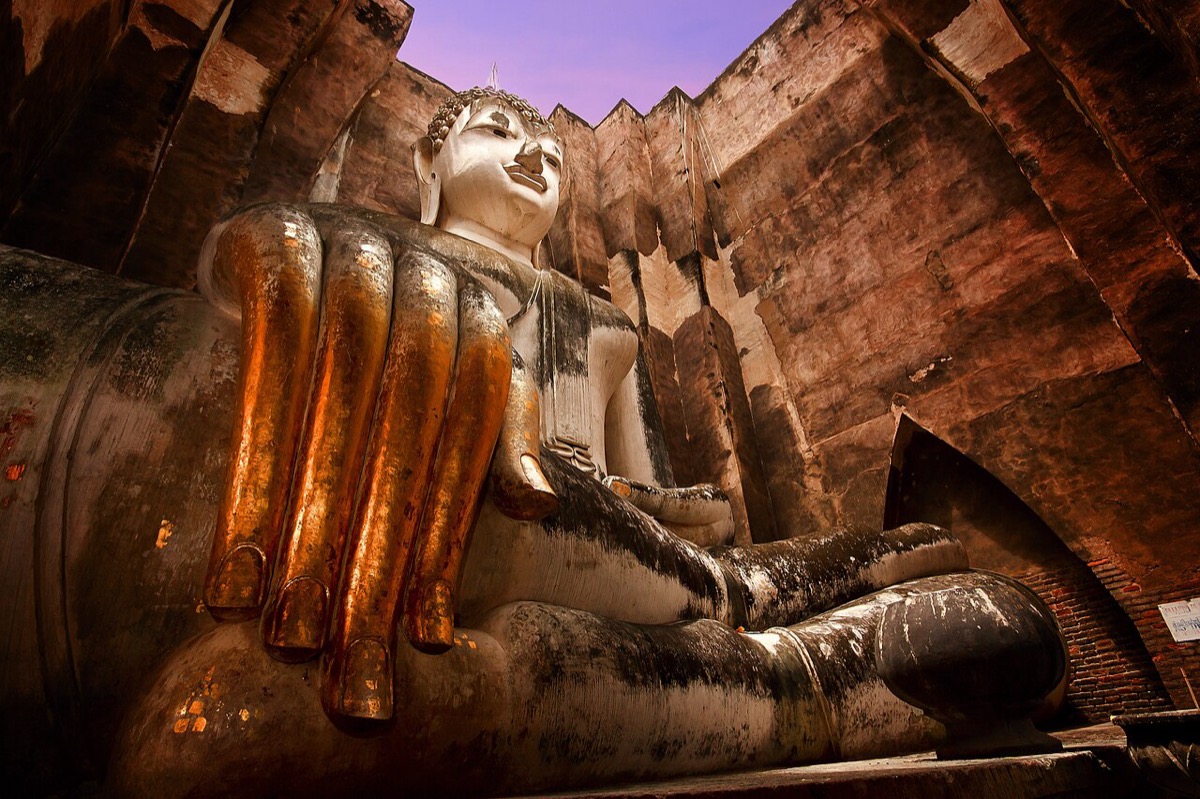
At Wat Si Chum in Sukhothai, the face of a large Buddha image appears through a narrow opening in a thick wall. Step inside and look up at the seated Phra Achana, about 15 metres high. The contrast between the narrow view from outside and the image’s scale within is striking.

Wat Si Chum is in the northwestern zone outside the Sukhothai Historical Park’s walled central zone. The walls around Phra Achana are about 3 metres thick and contain an old passage, but visitors are not allowed to enter it. You must travel separately from the central walled zone, and admission tickets are sold by zone.

Location and getting there

The pin marks the place, not necessarily its entrance, ticket office or vehicle drop-off point.

Area

Mueang Kao, Mueang Sukhothai, Sukhothai 64210

Essential visitor information

Visiting hours information
08:30–17:00

What can you see?

The Phra Achana seated Buddha beyond a narrow opening

Achana means “immovable” or “unchanging” in Pali. A large seated Buddha, about 15 m tall, fills the space enclosed by thick walls. Enter and look up at the serene face while reflecting on the meaning of its name.

From outside you first see the face through the gap in the wall; inside, the Buddha’s body appears along with the thickness of the walls around it. Look first from the entrance, then from up close at the statue. It is interesting to see how the architecture reveals the Buddha image.

A Bodhi grove in the name and thick-walled structure

The name Si Chum is said to derive from a Bodhi grove. The building housing the Buddha image has walls about 3 m thick, with a passage inside the left wall that runs behind the image towards the former roof. It is a structure with a separate path built within the solid outer walls.

The passage is described as having once contained images related to the Buddha. A legend says that someone inside the wall spoke as though the Buddha were speaking, giving the temple the nickname “the temple of the talking Buddha.” Understand this as a legend associated with the architecture.

Visit the open floor area instead of the passage

The passage within the wall is closed to visitors according to the Tourism Authority. Even if you know the old route exists, do not climb inside or try to go behind the Buddha. View the image and building from the areas open to visitors on the ground.

Wat Si Chum is in the historical park’s northern zone. If you have a central-zone ticket, check whether it includes this site before visiting. Even to see one additional Buddha image, you may need separate travel arrangements and admission coverage.

Before you visit

Wat Si Chum is a northern site outside the central zone

The seated Phra Achana at Wat Si Chum is in the northern zone of Sukhothai Historical Park. It is separate from the central zone, where Wat Mahathat is located, so a ticket covering only the central zone does not include Wat Si Chum. If you plan to visit several zones, check that your ticket covers the northern zone.

Entry to the passage in the wall is prohibited

Tourism Authority guidance says entry to the passage inside the wall beside the Buddha image is prohibited. Do not climb into the passage; use the visitor areas open on site.

What to wear when visiting the temple

Visitors of all genders are advised to wear clothing that covers the shoulders and knees. A sleeved top with long trousers or a skirt that covers the knees is a practical choice. Please visit in respectful clothing rather than a sleeveless top or short bottoms.

Frequently asked questions

Who is the large Buddha image seen through the wall opening?

It is the seated Phra Achana, about 15 metres high. Achana is described as meaning “unmoving” or “unchanging”. After seeing the face through the narrow opening, you can enter the open visitor area to look up at the full figure.

Can I enter the passage inside the wall beside the Buddha?

No. There is an old passage inside the roughly 3-metre-thick wall, but the Tourism Authority lists it as off limits. Treat the passage and the legend of the speaking Buddha as part of the site’s history, and view the image from the open ground-level visitor area.

Sources checked:

Official sources · 2

Sharing image credit: Khunkay / Wikimedia Commons · CC BY-SA 4.0