Phra Pathom ChediWat Phra Pathom Chediวัดพระปฐมเจดีย์

Nakhon Pathom · Temple centred on a large bell-shaped chedi in Nakhon Pathom

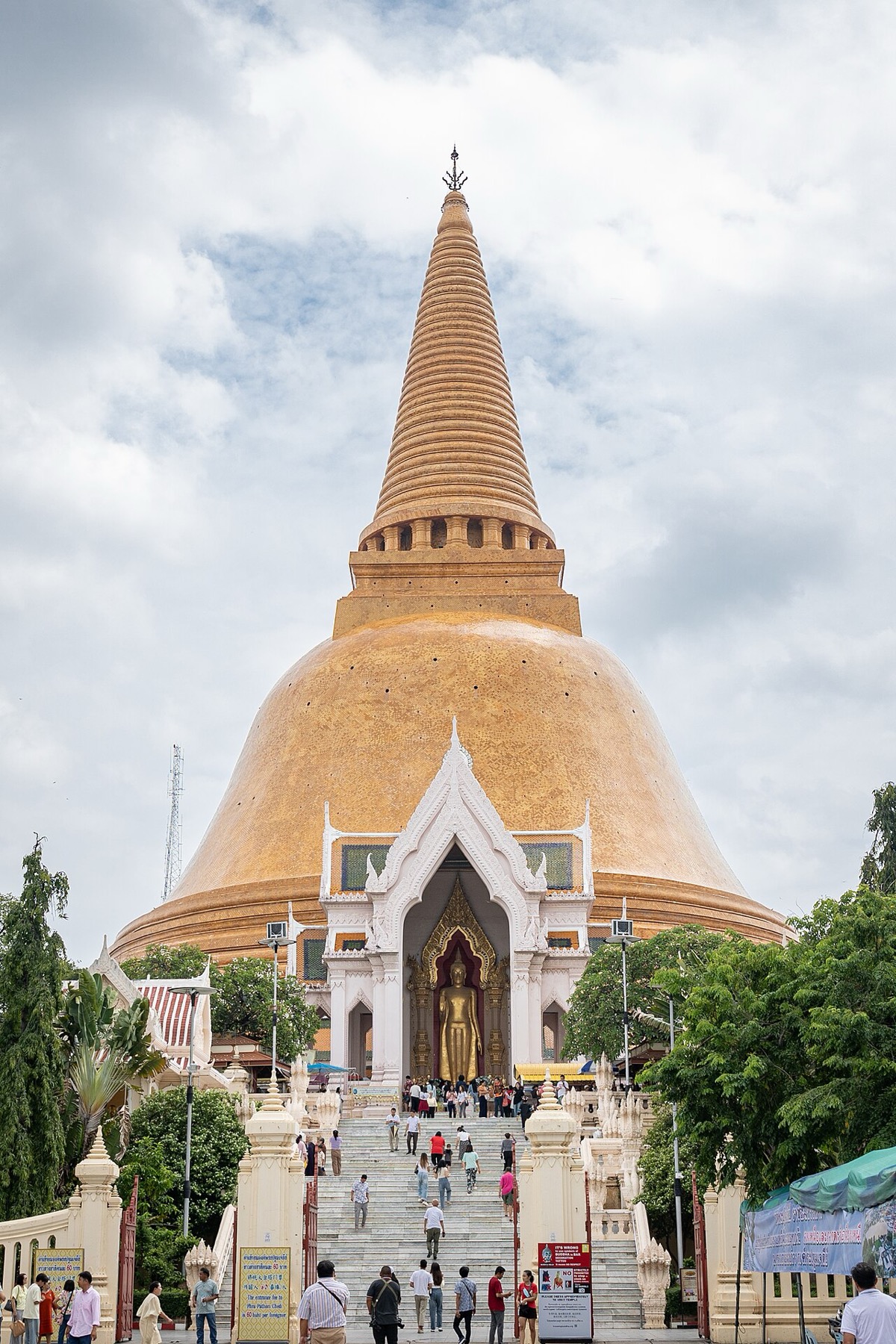
Phra Pathom Chedi is a temple in Nakhon Pathom centred on a huge bell-shaped chedi. About 120 m high, the stupa is visible from a distance; nearby, you can walk through the gallery, see the northern standing Buddha and observe worshippers at the temple.

If you travel from Bangkok by train, plan the walk from the station and the return train in advance. Once you reach the chedi, walk along the galleries to see it from different angles, and visit the standing Buddha to the north. Take your time exploring the large stupa, other Buddha images and the local worship scene.

Location and getting there

The pin marks the place, not necessarily its entrance, ticket office or vehicle drop-off point.

Area

Phra Pathom Chedi Subdistrict, Mueang Nakhon Pathom, Nakhon Pathom 73000

Walk from Nakhon Pathom station

The walk from Nakhon Pathom station is listed as about 10 minutes. Search for Phra Pathom Chedi on your map. If you travel by train from Bangkok, plan your return train too.

Essential visitor information

Opening information
07:00–21:00

What can you see?

A bell-shaped chedi visible across the city

A tall spire rises above the large bell-shaped body, the temple’s signature form. The Tourism Authority lists the height as 120.45 m. Its outline from far away differs from its scale when viewed from below, so the approach to the stupa is part of the experience.

The temple preserves an old story of Buddhism’s arrival in the region, and the chedi underwent several restorations during the reigns of Rama IV and Rama V. The large structure seen today brings together a long religious history and later royal restoration work.

The northern standing Buddha and temple galleries

To the north is the standing Phra Ruang Rojanarit, built during the reign of Rama VI. After seeing the large chedi, visit the area enshrining the Buddha image as well. Walk along the galleries and see the Buddha image to explore further into the temple where worshippers gather.

You can also see Buddha images in Dvaravati style on the grounds. A portion of King Rama VI’s ashes is said to be enshrined here as well. Spend time exploring the galleries and Buddha images after viewing the great chedi to see Buddhist art from different periods and learn about royal restoration of the stupa.

Annual festival and local food

The Phra Pathom Chedi festival, held according to the lunar calendar, is described as bringing worshippers, local food and products, and a market in front of the temple. It is an event that connects temple worship with local food and shopping.

If you want to visit for the festival, check the actual dates for the year you plan to go. As it follows the lunar calendar, the dates on the Gregorian calendar vary each year. On an ordinary day, explore the temple at a relaxed pace; during the festival, you can also enjoy local food and products at the market in front of the temple.

Before you visit

Suggested clothing for a temple visit

For all visitors, we recommend wearing clothing that covers the shoulders and knees. A sleeved top with long trousers or a skirt that covers the knees is a good choice. Please dress modestly rather than wearing a sleeveless top or short bottoms.

Frequently asked questions

What can I see on the grounds besides the large chedi?

Walk along the chedi’s gallery and look for the standing Phra Ruang Rojanarit Buddha in the north and Buddha images in the Dvaravati style. From a distance, you can take in the bell-shaped chedi as a whole; up close, you can see the worship areas and Buddha images.

Does the Phra Pathom Chedi Festival take place on the same dates every year?

No. The festival follows the lunar calendar, so its dates on the Gregorian calendar change each year. During the festival, worship is accompanied by a market featuring local food and products. At other times, visits focus on the chedi and its galleries.

Sources checked:

Official sources · 2

Sharing image credit: Mastertongapollo / Wikimedia Commons · CC BY-SA 4.0