
How much is admission?
Admission is 200 baht for foreign visitors and free for Thai visitors. This is the temple entry fee; the boat fare for crossing the river is separate.
Bangkok · Riverside Buddhist temple
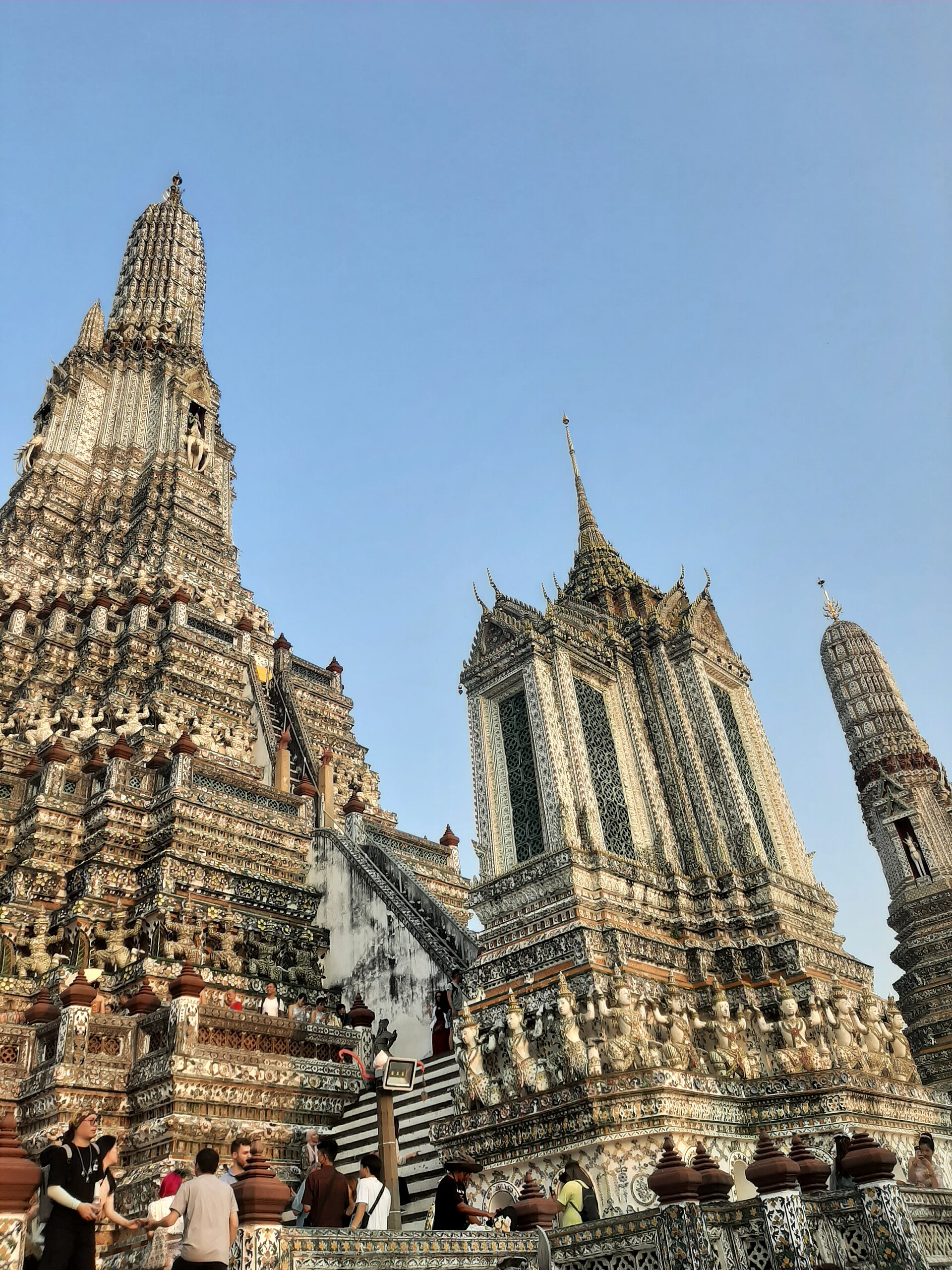
When the bright prang comes into view from a boat crossing the Chao Phraya River, you are nearing Wat Arun. Known as the Temple of Dawn, it stands on the west side of Bangkok. From the riverbank you can take in the tower’s outline; once inside the grounds, you can see ceramic fragments and small figures that are hard to make out from a distance.
After looking around the smaller towers surrounding the central prang and the guardians at the entrance, visit the Buddha image and murals inside the main hall. If you are crossing by boat from Wat Pho, you can see the full tower from the river and then examine its ceramic details and sculptures up close.
The pin marks the place, not necessarily its entrance, ticket office or vehicle drop-off point.
Itsaraphap Station on the MRT Blue Line is on the same west bank of the Chao Phraya River as Wat Arun. From this station, you can walk to the temple without taking a boat across the river.
At Sathorn Pier, choose a route that stops at Wat Arun Pier. The stop lists differ between regular express boats and tourist boats.
From Tha Tien Pier on the Wat Pho side, you can take the cross-river ferry. This is a different service from boats traveling along the river, so when buying your ticket, ask for the boat crossing to Wat Arun.
Trip.com · Costume and experience bookings
Reference prices for international visitors, shown in US dollars on the English booking site.
Prices depend on your visit date, availability and selected option. The booking page shows the final price and inclusions.
View options and book on Trip.comAffiliate link: ThaiLiveNow may earn a commission if you book through this link.
The tall tower at the heart of Wat Arun is called the Phra Prang. From across the river, its height and long outline stand out first. Up close, you can see the ceramic fragments covering its surface and the decorations arranged like flowers. Take a closer look at the small pieces that make up its bright exterior.
Four smaller prangs stand around the central tower. Rather than photographing only the main tower and leaving, take a moment to notice the decorations and rooflines between the smaller ones too. Some stairs on the prangs are high and steep, so use only the sections open to visitors on site.
The temple’s name comes from Aruna, a Hindu deity associated with dawn. The site dates back to the Ayutthaya period, while the halls and towers you see today reflect later additions and restoration by successive dynasties. Wat Arun is more than a riverside viewpoint; religious activities have taken place here for a long time.
The Emerald Buddha was once enshrined at Wat Arun. After the dynasty changed, it was moved across the river to Wat Phra Kaew in Bangkok. From Wat Arun, look across the river towards the palace, where the statue is now kept, and you can see the distance between its former and present homes.
Two yaksha guardian figures stand at the temple entrance. They are larger than the small decorations on the prangs, so take a look at the figures guarding the entrance before walking straight towards the towers.
The ordination hall, called the ubosot, contains a Buddha image and murals. After seeing the ceramic decorations on the outer towers, step inside to look at the paintings too. Remove your shoes before entering the hall and look around quietly without blocking people who are praying.
You can cross the river from Tha Tien Pier on the Wat Pho side, or take a boat service that stops at Wat Arun Pier. From the boat, you can see the riverside temples and towers together; once you arrive, walk closer to the prang to examine its decorations. The boat fare and temple admission are charged separately.
Nagaraphirom Park is a public riverside park opposite Wat Arun. It offers a place to look across the river at the full outline of the prang without paying for a restaurant or rooftop seat. You can see the ceramic details inside the temple grounds, then come here to take in the river and tower together. Check whether the park is open before you visit and follow the on-site entry guidance.
The Tourism Authority of Thailand’s 2024 night-viewing guide lists the main prang’s lights as running from 18:00 to 06:00 the following day. This may vary with conditions on site. In daylight, the ceramic details stand out on the bright tower; after the lights come on, its outline rises above the dark river. These hours refer to the exterior lighting, not the opening hours for entering the temple grounds.
Some of the prang stairs are high, steep or narrow. Use only the sections open to visitors on site, and do not climb on or damage the decorations.
Visitors of all genders are advised to wear clothing that covers the shoulders and knees. A sleeved top with long trousers or a skirt that covers the knees is a practical choice. Please visit in respectful clothing rather than a sleeveless top or short bottoms.
Please remove your shoes before entering the ordination hall (ubosot). If you use a wheelchair or pushchair, contact the temple office in advance to ask which entrance and viewing areas you can use.
Admission is 200 baht for foreign visitors and free for Thai visitors. This is the temple entry fee; the boat fare for crossing the river is separate.
The temple is open daily from 08:00 to 18:00. If you visit in the late afternoon, leave enough time to explore before closing.
Visitors of all genders are advised to wear modest clothing that covers the shoulders and knees. Remove your shoes before entering the ordination hall.
You can walk from Itsaraphap Station on the MRT Blue Line. If traveling by boat, choose a service that stops at Wat Arun Pier. If you are already on the Wat Pho side, you can also take the cross-river ferry from Tha Tien Pier.
Yes. You can view the tower from the riverbank across the river. You need an admission ticket to explore the temple grounds. Follow the on-site guidance about which parts of the tower are open to visitors.
No. They are separate temples on opposite sides of the Chao Phraya River. Wat Arun, on the west bank, is known for its prang; Wat Pho, on the east bank, is known for the Reclining Buddha. Each requires its own admission ticket.
Entry to the temple grounds closes at 18:00. You can see the exterior of the prang from across the river, and the Tourism Authority of Thailand’s 2024 night-viewing guide lists the main prang’s lights as running from 18:00 to 06:00 the following day. The lighting hours are not the temple’s opening hours.
Sources checked:
Sharing image credit: Welcome to Thailand / Wikimedia Commons · CC0 1.0 Universal