Buddhist art and royal crafts in one place
The collection starts with prehistoric artefacts and continues through the art of Thailand’s different kingdoms to the present Chakri dynasty. Religious artworks include pieces from the late 6th century onwards, letting you see objects from different periods together rather than only images at one temple.
Alongside Buddha images, the museum displays traditional crafts associated with the royal court. If you have seen large Buddha images and halls at temples, here you can look closely at sculpture and craft objects and examine their materials and decoration. Visitors interested in religious art and royal life can explore both kinds of collection in the same visit.
A grand carriage used for royal funerals
You can also see large, elaborate carriages used for royal funerals. After viewing small objects in cases, the size of the carriages stands out when you approach them. Up close, take a look at the decorations covering their surfaces.
Compare small craft objects with a huge ceremonial carriage in the same museum. If you are interested in Thai royal ceremonies and traditional crafts, look at the carriage’s decorations one by one as well as its size.
The Si Hin Buddha and murals in a former palace chapel
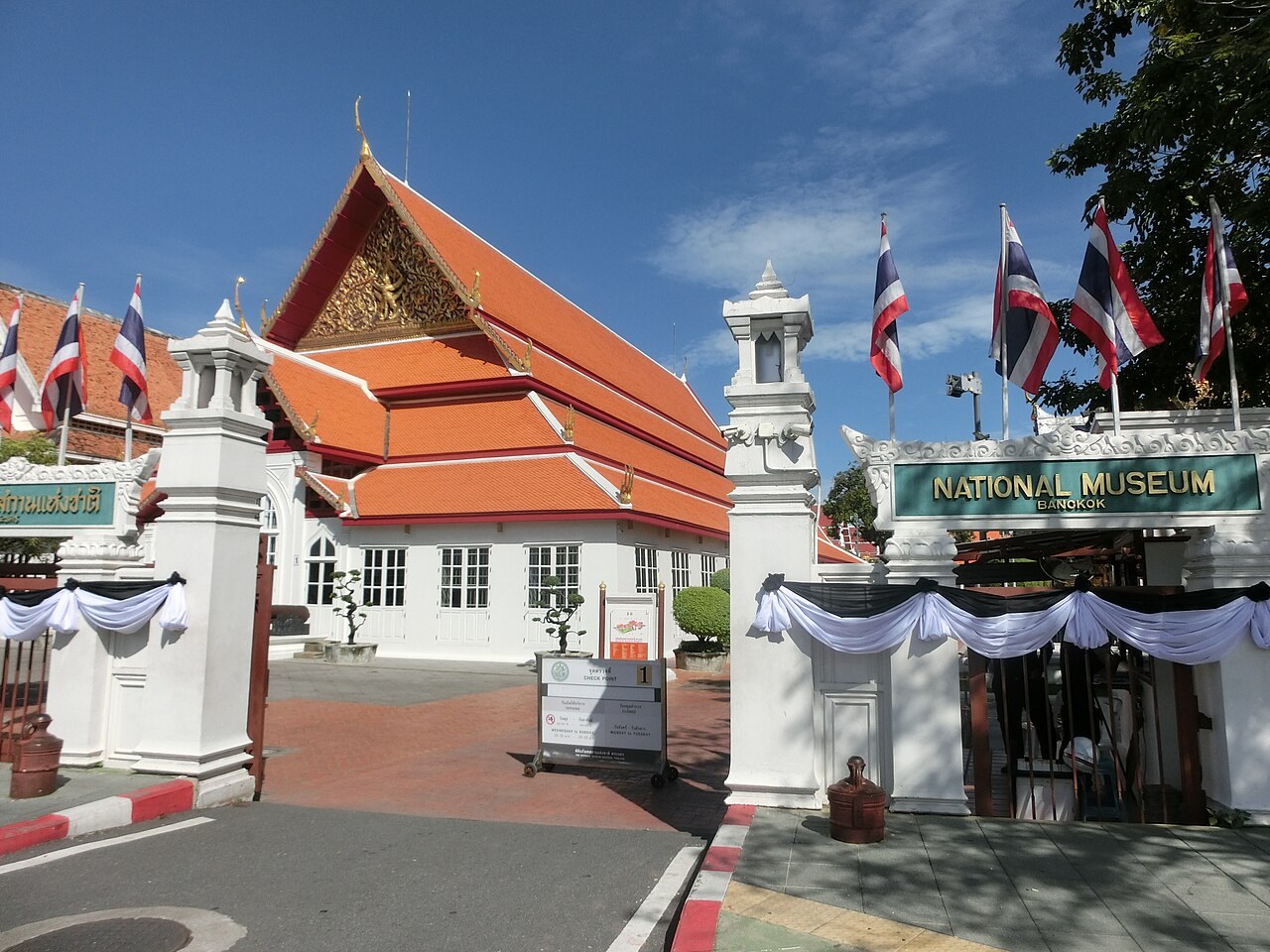
The museum’s historic buildings are not new galleries made to resemble part of a palace; they are buildings from the former Front Palace where the viceroy lived. Built in 1782, the Front Palace became a museum in 1887, and the present museum also includes exhibition buildings added later.
In the chapel housing the Si Hin Buddha, look at the walls behind and beside the image. Murals depicting the Buddha’s life remain on the interior walls. Unlike viewing objects in cases, here you can experience the whole worship space inside the building, with the Buddha image and murals together.