
Massage pavilion inside the temple
- Hours
- 09:00–19:00
- Last registration
- 18:00
- How to use
- No reservations · register in person
Bangkok · A royal temple known for its Reclining Buddha and traditional medicine
Up close, the Reclining Buddha’s 46-metre golden body fills the hall. Look down at its feet to see 108 mother-of-pearl designs, where the statue’s immense scale meets fine craftsmanship. Wat Pho is a royal temple just south of Bangkok’s Grand Palace.
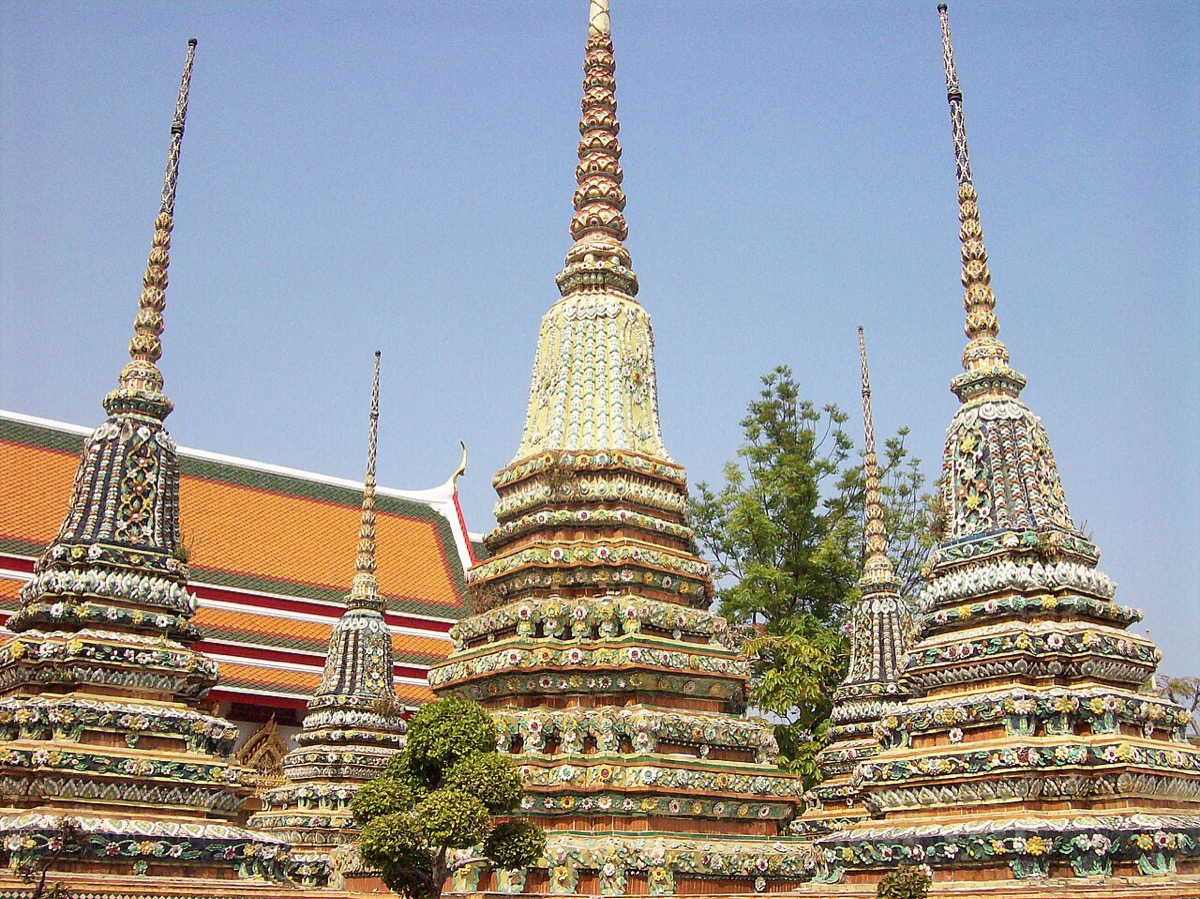
After seeing the Reclining Buddha, walk among the four royal chedis, each decorated in a different colour, and through galleries lined with Buddha images. Chinese-style stone figures and stone inscriptions on medicine and language also show how Wat Pho shared knowledge. You can also have a traditional massage after your visit for an additional fee.
The pin marks the place, not necessarily its entrance, ticket office or vehicle drop-off point.
2 Sanamchai Road, Grand Palace Subdistrict, Pranakorn District, Bangkok 10200
From Sanam Chai Station on the MRT Blue Line, it is about a five-minute walk to the temple. If you are travelling by boat, you can reach the temple from Tha Tien Pier.
Trip.com · Costume and experience bookings
Reference prices for international visitors, shown in US dollars on the English booking site.
Prices depend on your visit date, availability and selected option. The booking page shows the final price and inclusions.
View options and book on Trip.comAffiliate link: ThaiLiveNow may earn a commission if you book through this link.
You can get a massage after your visit at the massage pavilion inside Wat Pho. The hours and prices below are provided by the operator of this location, which is separate from its Tha Tien branch outside the temple. Temple admission and massage are charged separately.
Thai massage and foot massage are separate services. The prices are the same for the same duration.
See the official massage menu ↗Built during the reign of Rama III, the Reclining Buddha measures 46 metres long and 15 metres high. Take your time following the figure from its face along its outstretched body to its feet. The soles bear 108 mother-of-pearl designs made from shaped shell, bringing delicate craftsmanship to this monumental statue.
After taking in the golden figure, look closely at the mother-of-pearl on its soles. Small designs reflecting Buddhist cosmology form a closely arranged pattern. The Reclining Buddha is enshrined inside a hall, so enter the designated viewing area to see the statue and its decorated feet.
The four large chedis inside the white walls are associated with Kings Rama I through Rama IV. Green, white, yellow and deep blue mosaics give each tower a distinct look. Follow the colours to tell apart chedis that may seem similar at first.
The green chedi houses a damaged Phra Si Sanphet Buddha image brought from the royal palace in Ayutthaya. After Ayutthaya fell, the surviving image was moved to Bangkok and enshrined inside this chedi. A Buddha image from Ayutthaya’s former royal temple remains at Wat Pho today.
The temple describes the inner gallery of the double corridor around the main hall as holding about 150 Buddha images, with more than 244 in the outer gallery. These images were brought from northern Thailand during the reign of Rama I and are now covered in gold leaf. As you walk through the galleries, compare the faces and poses of the different images.
One hundred stone slabs inscribed with Thai verse from the reign of Rama III hang from the gallery pillars. This was a place to read and learn as well as to view Buddha images. Even if you do not read Thai, you can still take in the arrangement of the images beside the inscriptions.
Some Chinese-style stone figures along the paths came from stone ballast once carried on Chinese trading ships. You will see not only armed guardians, but also officials holding books, monks and working people. Look at their materials and depictions of people alongside the golden Buddha images.
Rama III had knowledge from several fields inscribed around the temple so people could learn from it. This is why Wat Pho is often likened to Thailand’s first university. The temple served not only as a place of worship, but also as a centre for sharing knowledge about subjects such as medicine and language.
Traditional massage is available, but massage is not included in the temple admission ticket. If you would like one after your visit, choose a service and pay separately. It can be a restful way to end a visit after exploring the halls and galleries.
The temple closes at 20:00, but new visitors are admitted only until 19:30. If you are visiting in the evening, do not plan your arrival around closing time.
The massage pavilion accepts visitors in person without advance reservations. If you would like a massage after your visit, plan your route so you arrive before the 18:00 registration cutoff. Massage fees are not included in the temple admission ticket.
Wat Pho restricts women from entering in shorts that end above the knee. Visitors of all genders are advised to cover their shoulders and knees. Wear a top with sleeves and long trousers or a skirt that covers the knees.
Before entering a religious building, remove your shoes and place them on the designated rack. Check the signs and shoe racks at the entrances to shrines and halls, and follow posted directions elsewhere on the grounds.
Women may not enter areas specifically set aside for monks to perform ceremonies. This does not restrict women from visiting the temple as a whole. Follow area-specific signs and staff directions around the grounds.
No. Temple admission and massage are charged separately. After visiting the Reclining Buddha and the temple grounds, you can choose a massage type and duration on site and pay the fee separately.
After seeing the 108 mother-of-pearl designs on the 46-metre Reclining Buddha’s feet, walk among the four royal chedis associated with Rama I through Rama IV and through the galleries lined with Buddha images. You can also see Chinese-style stone figures and stone inscriptions about knowledge.
New admission to the temple closes at 19:30, but the massage pavilion’s walk-in registration closes at 18:00. If you would like a massage after your visit, go to the pavilion before registration closes.
The restriction on women applies to designated areas set aside for monks’ ceremonies; it does not mean women cannot visit the temple as a whole. Remove your shoes before entering religious buildings and follow the signs for each area.
Sources checked:
Sharing image credit: Philip Nalangan / Wikimedia Commons · CC BY 4.0