
Is the Golden Mount a natural mountain?
No. It is a man-made hill, about 77 metres high, added above the old Wat Saket temple. You can view the temple and hill together from below, then climb to the golden reliquary chedi at the summit.
Bangkok · Golden Mount chedi and old-city viewpoint temple
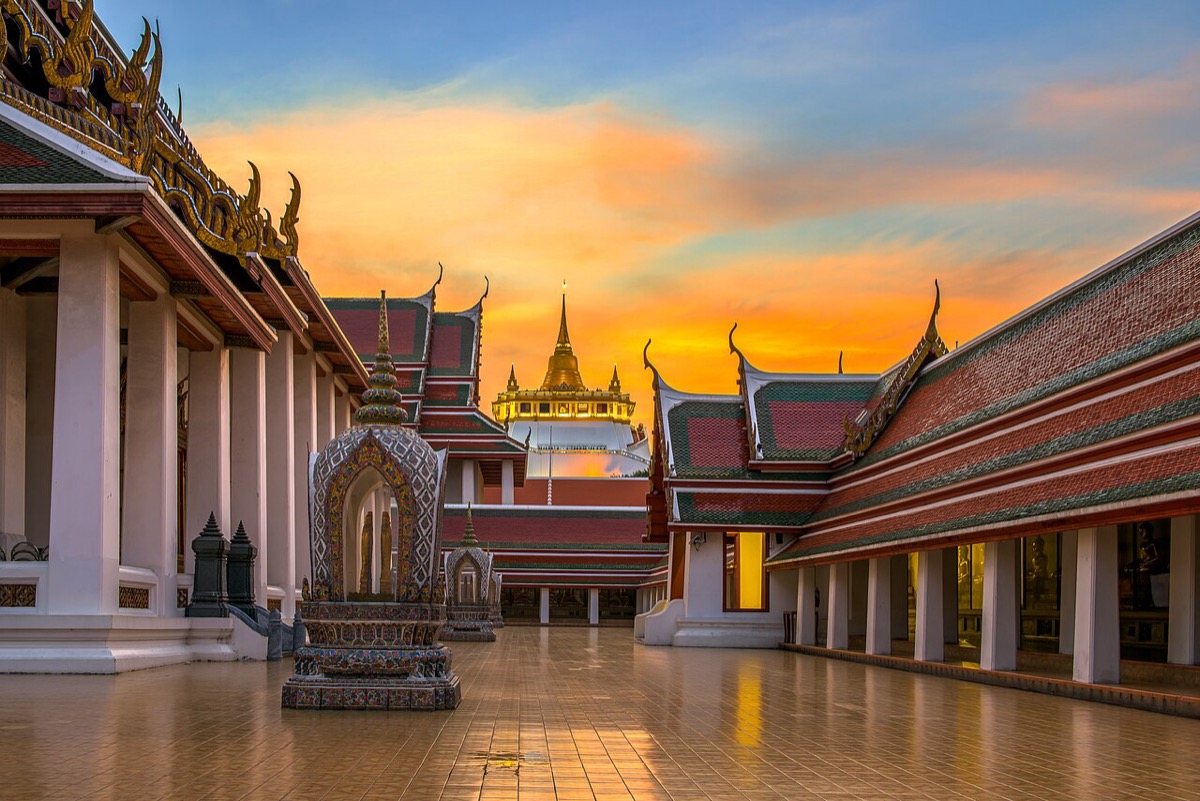
Above the rooftops of Bangkok’s Old Town, a golden chedi marks the Golden Mount at Wat Saket. Climb the stairs up the man-made hill and you will see worshippers near the chedi as well as the city spread around it.
Look around the lower part of the temple, then climb the stairs to the golden reliquary chedi and views over the Old Town. Reaching the top and returning means using the stairs, so this visit suits companions who can manage them and have time to explore at an easy pace.
The pin marks the place, not necessarily its entrance, ticket office or vehicle drop-off point.
344 Thanon Chakkraphatdi Phong, Ban Bat, Pom Prap Sattru Phai, Bangkok 10100
The Golden Mount is listed as about a 15-minute walk from Sam Yot Station on the MRT Blue Line. Search for Wat Saket or Golden Mount as your destination.
The Golden Mount is a man-made hill built at the temple, not a natural mountain. Its Thai name, Phu Khao Thong, means “Golden Mountain”. Completed during the reign of Rama V, the hill rises about 77 metres above the temple roofs, making it easy to spot as you walk through the Old Town.
From a distance, the hill and golden chedi form a single outline. At its base, you can make out the temple buildings and the stairs leading upwards. Before climbing, take in the whole site from below. You can see the older temple, which dates back to the Ayutthaya period, and the man-made hill added later.
Wat Saket existed before the Golden Mount was built. It was called Wat Sakae during the Ayutthaya period and received its present name in 1782, when the Bangkok dynasty began. Knowing this history helps show that the golden chedi at the summit is only part of the site’s story.
The Tourism Authority also recounts that Rama I stayed here to have his head shaved before his coronation ceremony. “Saket” is a royal term associated with the king’s hair grooming. As you think about the name left by this royal ceremony, start by looking around the old temple at the foot of the hill.
There are 344 steps winding up the Golden Mount. Reaching the chedi you see from below means climbing them, so consider first whether you are comfortable with the stairs. The golden chedi at the top enshrines relics, making this both a viewpoint and a place of worship.
From the upper gallery, you can turn in different directions to see Bangkok’s Old Town. Rather than looking in one direction and heading straight back down, walk around the chedi and follow the rooftops and streets as they meet the horizon. Step aside where worshippers are gathering so you do not block their way.
Visiting the Golden Mount means climbing the steps and walking back down again. Allow enough time for the round trip as well as your time at the viewpoint.
Visitors of all genders are advised to wear clothing that covers the shoulders and knees. A sleeved top with long trousers or a skirt that covers the knees is a practical choice. Please dress modestly rather than wearing a sleeveless top or short bottoms.
No. It is a man-made hill, about 77 metres high, added above the old Wat Saket temple. You can view the temple and hill together from below, then climb to the golden reliquary chedi at the summit.
You can see the temple at the foot of the hill, but you need to climb the stairs to reach the worship area beside the golden reliquary chedi and the Old Town views. Visiting the summit means climbing up and back down.
Sources checked:
Sharing image credit: BerryJ / Wikimedia Commons · CC BY-SA 4.0