
Is Ayutthaya Historical Park all in one place?
The ruins are spread across several temples and palace sites in and around the city. It is not a single enclosed park where you enter and see everything; you travel between the different sites.
Ayutthaya · Historic royal-capital and temple ruins across multiple sites
Ayutthaya Historical Park lets you explore palace remains and temple ruins in Siam’s former capital. Founded around 1350, the city grew into a center of international trade and diplomacy before it was destroyed in the war of 1767. Its chedis and the remains of halls still tell that story.
Each site has a different character: Wat Mahathat is known for a Buddha head embraced by tree roots, Wat Phra Si Sanphet has three chedis in a row, and Wat Chaiwatthanaram stands beside the river. It suits visitors interested in history and architecture, or those who want to see both Bangkok’s Grand Palace and the former capital. The ruins are scattered through the modern city rather than enclosed within one park.
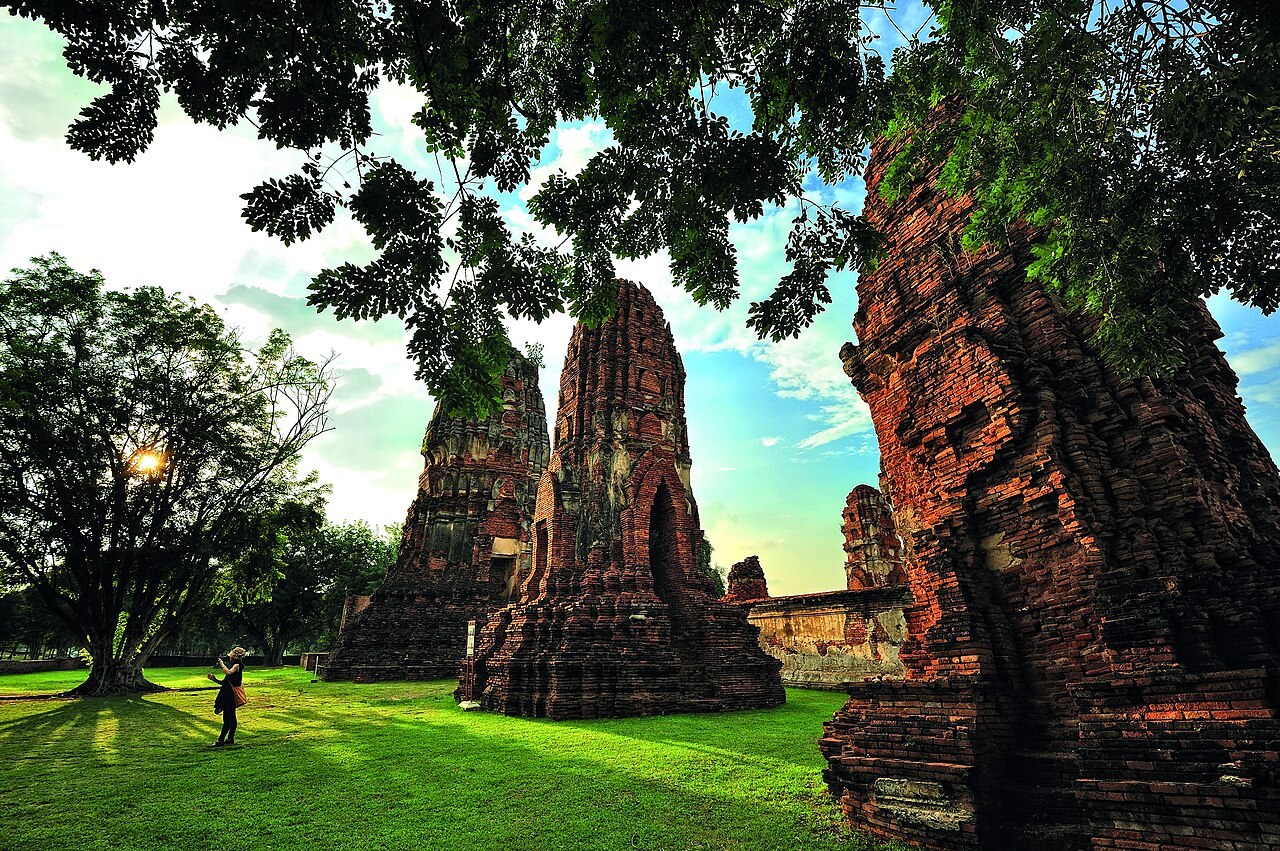
Ayutthaya was founded around 1350 and became the capital of Siam after Sukhothai. Surrounded by three rivers, it grew into a center of trade and diplomacy, but the old city was destroyed in the war of 1767 and remains as ruins.
The main sights are therefore not lavishly furnished palace interiors, but tall towers, collapsed halls and large temple grounds. As you look at the scale of the surviving buildings, imagine how large the former capital was. The old city of Ayutthaya is a UNESCO World Heritage Site.
To see a Buddha head wrapped in tree roots, visit Wat Mahathat; for three chedis standing in a row and a royal temple site, choose Wat Phra Si Sanphet. If you want a central prang and surrounding galleries beside the river, consider Wat Chaiwatthanaram.
Wat Phra Si Sanphet is a royal temple connected with the palace grounds, while Wat Chaiwatthanaram stands by the river, where its towers and galleries form part of the waterside scene. Rather than stopping after a photo of one Buddha image, visit a royal temple and a riverside temple to compare the different scale and layouts of Ayutthaya’s surviving religious architecture.
Ruins are spread throughout the present-day city. Choose the sites you want to visit and allow time to travel between them.
Some temples are still active places of worship, while others remain as ruins. Clothing, fees and entry arrangements are not the same at every site.
Even a combined pass does not provide entry to every temple and museum in Ayutthaya. Wat Mahathat, with the Buddha head among tree roots; Wat Phra Si Sanphet, with its royal chedis; and riverside Wat Chaiwatthanaram are separate sites that require travel between them. A combined pass has its own list of included sites and validity period.
The historical park is spread across multiple sites, so opening hours and last admission vary by location. One site opening at night does not mean the entire historical park remains open into the evening.
The ruins are spread across several temples and palace sites in and around the city. It is not a single enclosed park where you enter and see everything; you travel between the different sites.
It is at Wat Mahathat. Wat Phra Si Sanphet, where three royal chedis remain, and riverside Wat Chaiwatthanaram are separate sites.
Ayutthaya was the capital of a kingdom founded around 1350, but it was destroyed in the war of 1767. The historical park’s surviving chedis, walls and palace grounds show traces of the old capital.
Sources checked:
Sharing image credit: Mr.Peerapong Prasutr / Wikimedia Commons · CC BY-SA 4.0