Wat Phra Si Sanphetวัดพระศรีสรรเพชญ์

Ayutthaya · Royal temple ruins in the former Ayutthaya palace

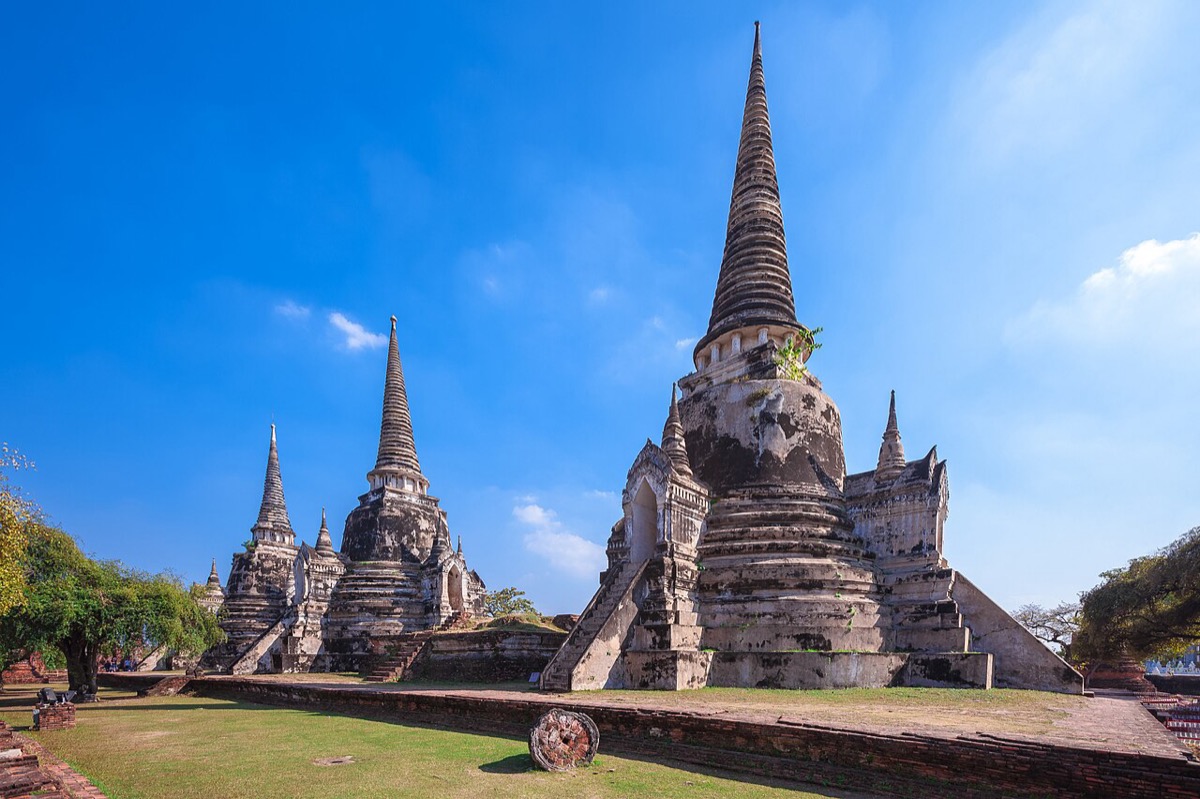
At Wat Phra Si Sanphet, three large bell-shaped chedis stand in an east–west line. This royal temple was connected to the former palace of Ayutthaya. Walk among the surviving chedis and hall foundations to appreciate the scale of a place where royal ceremonies took place.

Each chedi enshrines the remains of an Ayutthaya king. The extensive foundations of halls used for royal ceremonies also remain, reflecting a temple built for royal remembrance and religious rites. After viewing the three aligned towers, follow the foundations to see where the halls once stood.

Location and getting there

Area

Pratu Chai, Phra Nakhon Si Ayutthaya, Ayutthaya 13000

What can you see?

Three chedis for three kings

The eastern, central and western chedis each enshrine the remains of a king: Borommatrailokkanat, Borommarachathirat III and Ramathibodi II. The three bell-shaped towers stand side by side as memorials to the kings.

From a distance, take in the arrangement of the three structures; up close, look at each rounded body and its rising spire. The Fine Arts Department explains that smaller surrounding chedis also enshrine members of the royal family.

From former royal palace to royal ceremonial site

This site was originally a royal palace. After King Borommatrailokkanat moved the palace north, the former palace grounds became a temple used for royal religious and state ceremonies. An oath of allegiance to the king and royal family was also held here.

The halls and palace buildings are not all intact today. Look at the foundations and the direction of the towers to picture the layout of the temple beside the palace. This is a site from a different dynasty and city from Wat Phra Kaew at the present-day Bangkok Grand Palace.

The lost golden standing Buddha and its story at Wat Pho

The royal hall once housed a standing Buddha covered in gold, Phra Si Sanphet. The Fine Arts Department explains that when Ayutthaya fell, the gold was stripped away and the bronze core remained; King Rama I later moved it to Bangkok’s Wat Pho, where it was enshrined inside a chedi.

There is no large golden Buddha remaining at the hall foundations today. Picture the former hall as you look at the place where the image was enshrined and the building base. If you also visit Wat Pho in Bangkok, you can see the chedi where the damaged statue was re-enshrined. The history of the same Buddha connects the two cities.

Before you visit

The 2026 event pass is different from a regular visit

The Fine Arts Department’s event information for 2026 lists Phra Si Sanphet and the palace as one item on an event pass. The event hours are not the regular opening hours, and the event pass should not be treated as an ordinary admission ticket. Visiting the old palace grounds is limited to areas open to the public.

What to wear when visiting the temple

Visitors of all genders are advised to wear clothing that covers the shoulders and knees. A sleeved top with long trousers or a skirt that covers the knees is a practical choice. Please visit in respectful clothing rather than a sleeveless top or short bottoms.

Frequently asked questions

What were the three chedis built for?

The bell-shaped chedis to the east, center and west house the remains of King Borommatrailokanat, King Borommarachathirat III and King Ramathibodi II, respectively. The three large towers show that this was a royal memorial site.

Is the old golden standing Buddha still at the temple?

No. The Fine Arts Department explains that after Ayutthaya fell and the gold was stripped away, Rama I moved the remaining bronze image to Wat Pho in Bangkok and enshrined it inside a chedi. The palace ruins and chedis remain at this site.

Sources checked:

Official sources · 3

Sharing image credit: Supanut Arunoprayote / Wikimedia Commons · CC BY 4.0