
Does Waghor Aquarium have a glass tunnel?
Yes. The large tank and glass tunnel are key viewing areas. The aquarium also presents six environment zones from mountains and rivers to mangroves, coasts and the sea, along with aquatic specimens.
Prachuap Khiri Khan · Aquarium in King Mongkut Memorial Park of Science and Technology Waghor
Waghor Aquarium, in King Mongkut’s Science Park in Prachuap Khiri Khan, presents six aquatic environments ranging from mountains and rivers to mangroves, coasts and the sea. In the large tanks and glass tunnel you can see living animals; the specimen section lets you compare body structures.
Dolphins and dugongs also appear as models in ecology exhibits. Distinguishing models from animals in tanks helps make the exhibit’s environmental themes clearer. Group briefings for schools and other groups are listed as requiring an application two weeks in advance.
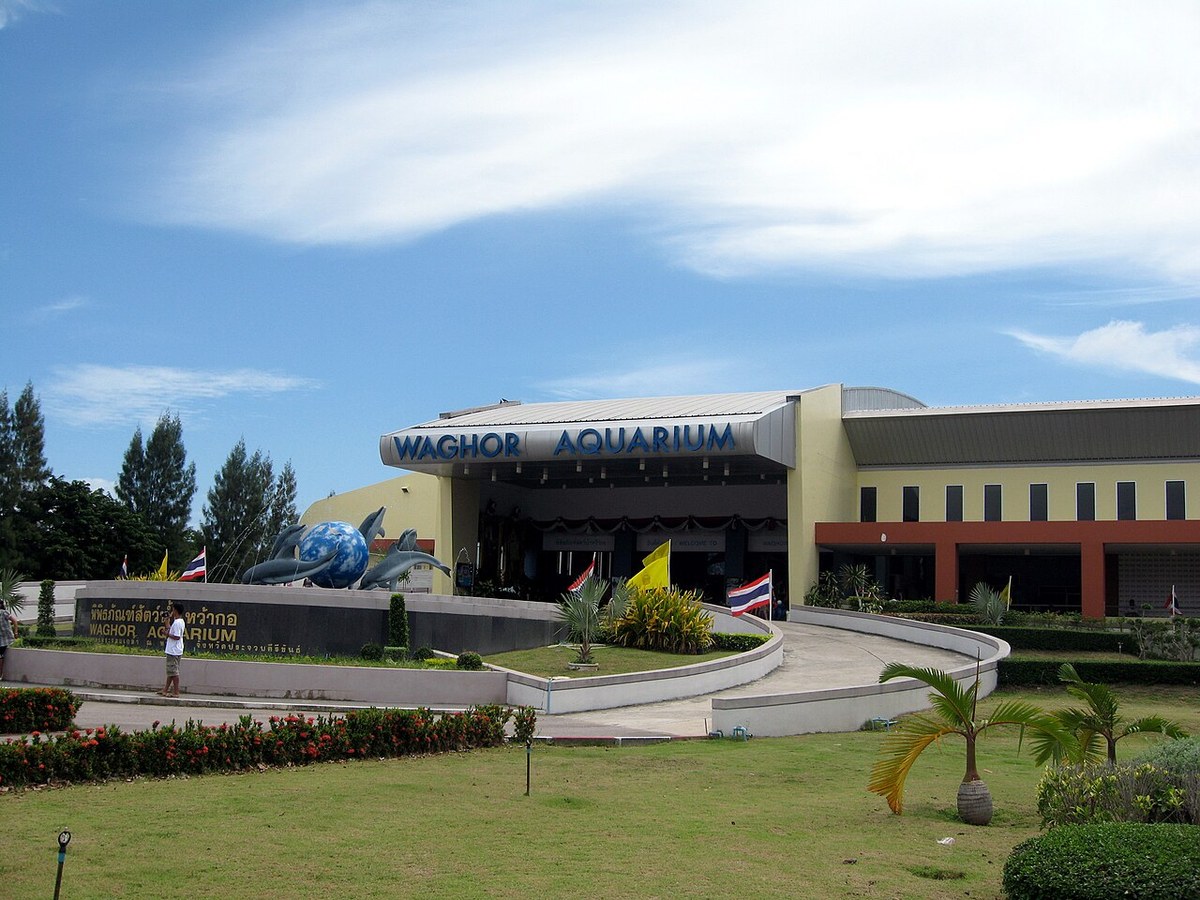
King Mongkut Memorial Park of Science and Technology at Waghor, Prachuap Khiri Khan
Waghor Aquarium is an educational space for marine science and natural history at King Mongkut’s Science Park. It divides aquatic environments from the mountains and rivers through to the sea into six zones, covering freshwater, brackish-water and marine ecosystems.
Exhibits about mangroves, sandy and rocky coasts, seagrass beds and coral reefs show how marine life differs by habitat. Dolphins and dugongs also appear as models explaining ecology; this does not mean every animal mentioned in the exhibits is kept alive in a tank.
The large tank, where you can see bigger animals, and the glass tunnel are key viewing areas. Look for animals near the surface, in mid-water and closer to the bottom. Even in the same tank, different animals occupy different areas.
In the glass tunnel, look for animals swimming overhead; in the large tank, observe their movement at different levels in the water. Diver feeding is also listed as a programme, but unlike self-guided viewing, it takes place at set times.
The aquatic specimen section covers six groups: sponges; corals and sea fans; molluscs; crustaceans; sea urchins and starfish; and fish. Unlike watching animals move in a tank, this exhibit lets you compare body shapes and types at your own pace.
The specimen section brings together animals with different body forms, including coral, molluscs, crustaceans, sea urchins, starfish and fish. You can compare their forms in one place, unlike in the live-animal tanks. Group briefings for schools and other groups are listed as requiring an application two weeks in advance.
Yes. The large tank and glass tunnel are key viewing areas. The aquarium also presents six environment zones from mountains and rivers to mangroves, coasts and the sea, along with aquatic specimens.
Exhibit materials include models explaining dolphin and dugong ecology. They do not say that visitors can see live dolphins or dugongs in the tanks.
Group briefings for schools and other groups are listed as requiring an application two weeks in advance. This application requirement is separate from general exhibit admission.
Sources checked:
Sharing image credit: ::::=UT=:::: · Wikimedia Commons · CC BY-SA 3.0