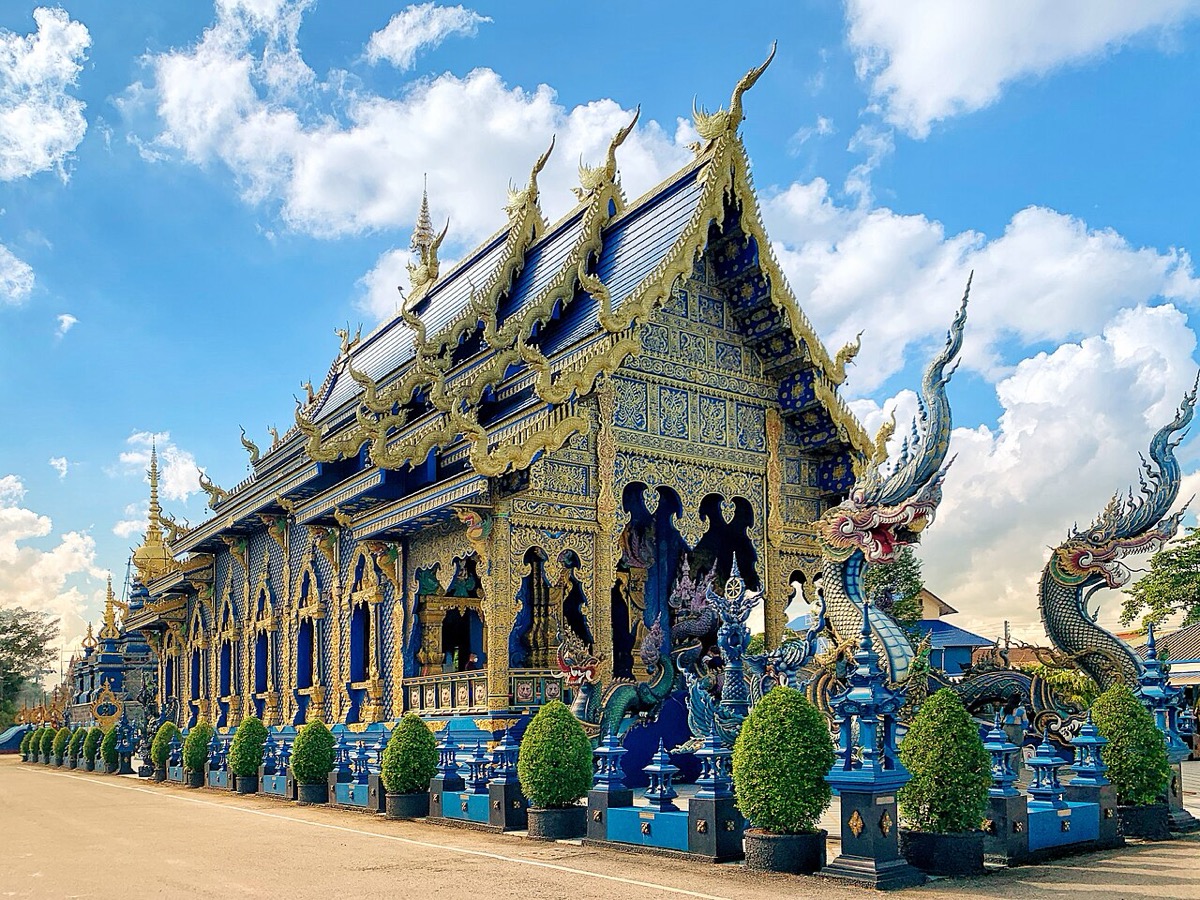
Follow the blue details around the hall
The nickname “Blue Temple” comes from the vivid blue exterior of the hall. First take in the building’s strong colour from a distance, then come closer to look at the details around the doors and eaves. Sculpted forms continue across the blue-painted surfaces.
Sculptures inspired by Buddhism and mythology appear throughout the building. Alongside the traditional temple roof form, you can see vivid colour and contemporary decorative expression. It also suits visitors who want to photograph striking architecture.
The naga and the influence of another Chiang Rai artist
The large naga in front of the main hall is more than entrance decoration. The Tourism Authority says its design was inspired by the craft of Thawan Duchanee, who created the Black House Museum. After seeing the blue hall and gold patterns, look at the naga’s long, curving body to see how the work of the architect and another artist meets in one place.
Suranok, the creator of the Blue Temple, was also a student of Chalermchai, who created the White Temple. If you plan to visit both, look beyond the colours: the naga here also references another local artist’s work.
Meaning in blue and gold
The Blue Temple’s colour makes a vivid photograph, but it also symbolises Buddhist teaching. The Tourism Authority connects its sky-like blue to the Dhamma, the Buddha’s true teaching. Gold details stand out against the blue and define the lines of the hall.
After looking at the blue and gold patterns in the main hall, look again at the naga at the entrance. You can consider the meaning of the colours separately from the local artist’s sculptural style. This is why the Blue and White Temples are more than two temples distinguished only by colour.