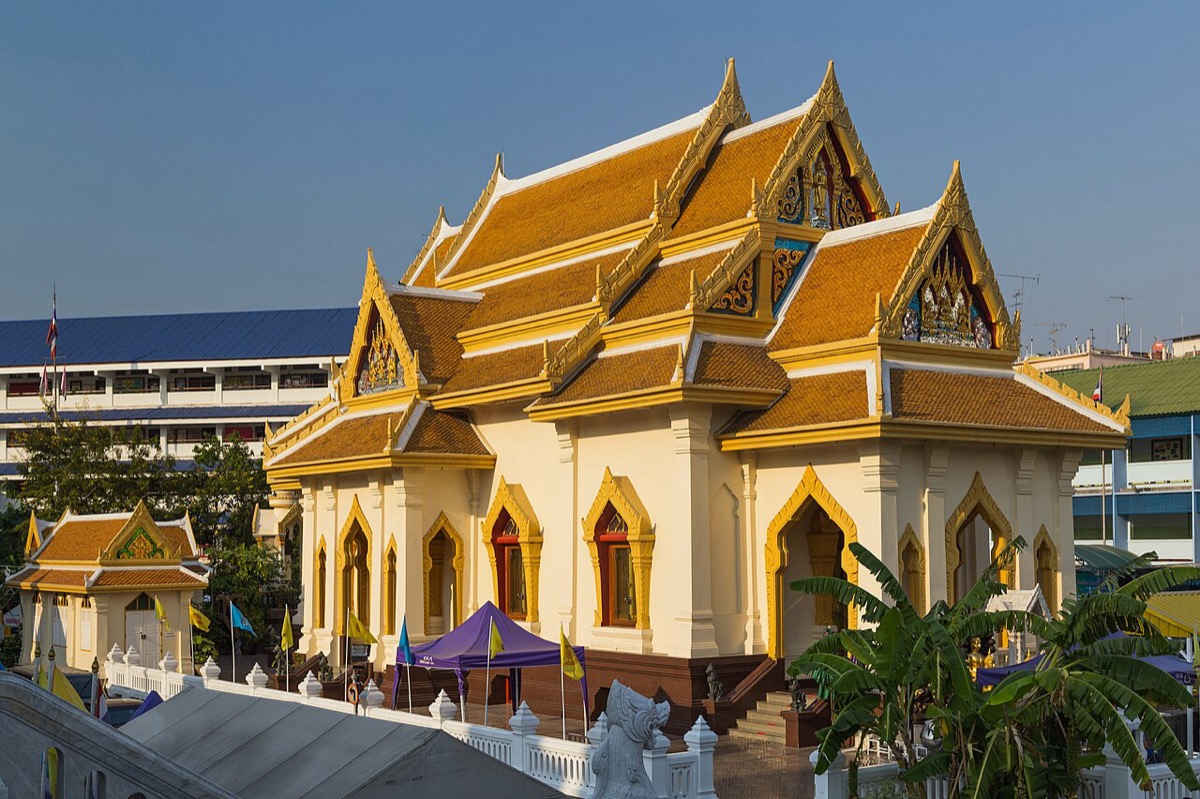
A 5.5-tonne golden Buddha revealed when the plaster cracked
The Buddha image is said to have been covered in plaster for a time, hiding its golden surface. The story goes that the plaster cracked while the image was being moved, revealing the gold underneath. The golden Buddha you see today comes with a story about its appearance being uncovered much later.
The seated gold image is described as weighing about 5.5 tonnes. Inside the hall, you can see its face and seated posture; outside, look at the large mondop that houses it. Remembering the discovery story may draw your attention to the golden surface now on display.
See the Golden Buddha and Yaowarat history displays separately
The Golden Buddha’s formal name is Phra Phuttha Maha Suwanna Patimakon. After viewing the seated image in the large mondop, visit the Yaowarat History Centre in the same temple if you are interested in the exhibits. The Tourism Authority of Thailand says they cover several themes in the history of Bangkok’s Chinese community and the development of the neighbourhood.
The Buddha’s worship area and the history-centre exhibits are separate visitor areas. If you want to see both, check on site what your ticket includes. Allow separate time for a visit focused on the Golden Buddha and a walk through Chinatown, and for a visit that also includes the history displays.
Continue from the temple into Yaowarat
The temple is close to the edge of Chinatown. After seeing the architecture and Buddha image during the day, you can continue with a walk among Yaowarat’s shops and restaurants. Set aside time separately for the temple and for a meal in the neighbourhood.
Even if you are mainly interested in Chinatown’s evening atmosphere, the temple visit needs to fit within its daytime viewing hours. Arrive before heading out for dinner so you can see the temple first, then experience both a religious site and the street scene in one neighbourhood.