Wat Yai Chai Mongkhonวัดใหญ่ชัยมงคล

Ayutthaya · Ayutthaya temple with a large chedi and Buddha images

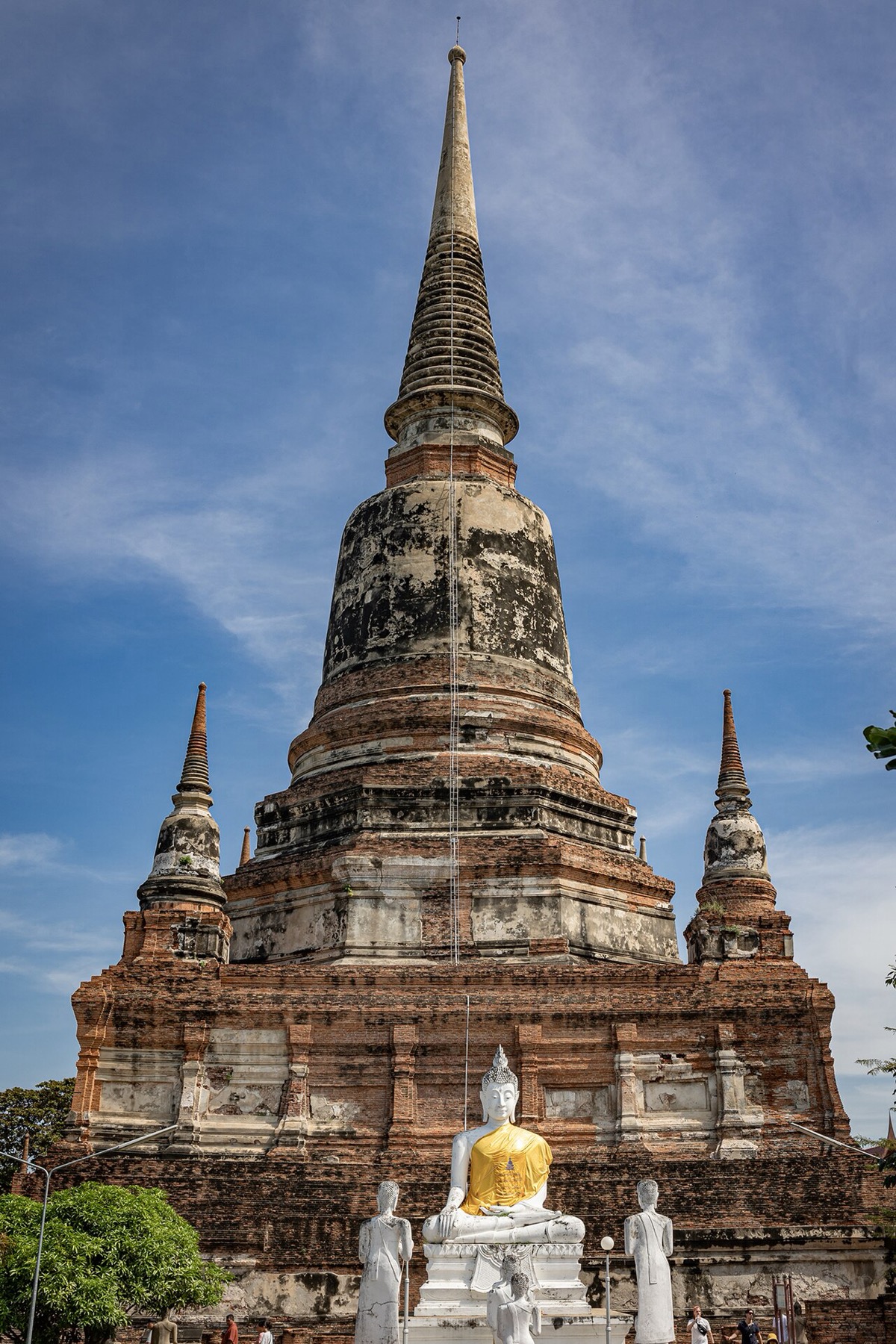
At Wat Yai Chai Mongkhon, the large bell-shaped chedi can be seen from a distance. Up close, this Ayutthaya temple has a tall square base, small towers at its four corners and a Reclining Buddha near the entrance.

The temple began in 1357 as a place of practice for monks who had studied in Sri Lanka. The large chedi is known as a memorial to King Naresuan’s victory in 1592. Today, visitors exploring the ruins and worshippers share the same temple grounds.

Location and getting there

The pin marks the place, not necessarily its entrance, ticket office or vehicle drop-off point.

Area

Khlong Suan Phlu Phra Nakhon Si Ayutthaya Phra Nakhon Si Ayutthaya 13000

Essential visitor information

Visiting hours
08:00–17:00
Admission information
40 baht

What can you see?

A temple for practice founded in 1357

The temple is described as having been founded in 1357 by King U Thong, who established Ayutthaya. It is said to have served as a place for meditation by monks who studied in Sri Lanka. It is also known by the name Wat Phra Chao Phaya Thai.

It is interesting to know that monks practised here before the current large chedi was built. As you look around the tower and surrounding halls, you can reflect on the temple’s long history alongside the former capital.

A victory chedi and the Reclining Buddha at the entrance

The tall bell-shaped chedi is said to have been built in 1592 to commemorate King Naresuan’s victory over the Burmese. The story of the king’s elephant-back duel is associated with this tower, but the temple itself dates back to 1357. The grounds bring together an early temple for practice and a later royal victory memorial.

The Tourism Authority says the large chedi stands on a tall square base, with a small tower at each corner. There is also a large Reclining Buddha at the entrance. First take in the main tower from a distance, then look separately at the entrance Buddha and the images around the base; there is more to see than the tall tower alone.

A temple where people still come to pray

Visitors viewing the old architecture and worshippers come together on the temple grounds. Follow on-site instructions about shoes and movement through the religious areas. Look around quietly and give way to anyone praying in front of an image.

Use only the chedi stairs and interior areas open on the day of your visit. Even if you cannot climb to the top, you can view the whole tower from outside and look at the surrounding Buddha images. Follow the on-site access guidance and explore at a comfortable pace.

Before you visit

Suggested clothing for a temple visit

For all visitors, we recommend wearing clothing that covers the shoulders and knees. A sleeved top with long trousers or a skirt that covers the knees is a good choice. Please dress modestly rather than wearing a sleeveless top or short bottoms.

Frequently asked questions

Was there a temple here before the large chedi was built?

Yes. The temple is described as having begun in 1357 as a place of practice for monks who had studied in Sri Lanka. The large victory chedi was built much later, in 1592, to commemorate King Naresuan’s victory.

What can I see if I cannot climb the chedi stairs?

From outside, you can view the large bell-shaped chedi and the smaller towers at its four corners, then see the Reclining Buddha near the entrance and the images around the base. Use only the stairs and interior sections open on the day of your visit.

Sources checked:

Official sources · 3

Sharing image credit: Mastertongapollo / Wikimedia Commons · CC BY-SA 4.0