
Audio guide languages
- Languages available
- Korean · Thai · English · Chinese · Russian
You can visit while listening to Korean-language audio commentary.
See official audio guide information ↗Samut Prakan · Museum with a three-headed elephant and three levels of exhibits
Erawan Museum in Samut Prakan is known for its enormous building topped by a three-headed elephant. After viewing the sculpture outside, go indoors to explore three levels: antiques and ceramics below, a stained-glass ceiling and religious decoration, then Buddha images and a celestial ceiling painting inside the elephant.
It suits visitors who want to photograph unusual architecture or enjoy Thai religious art and ceramics. There are small decorative details to see inside as well as the large sculpture outside, and after the museum you can walk around the garden with its mythical-animal figures. The museum is operated in connection with Muang Boran, but the two are separate facilities in different locations.
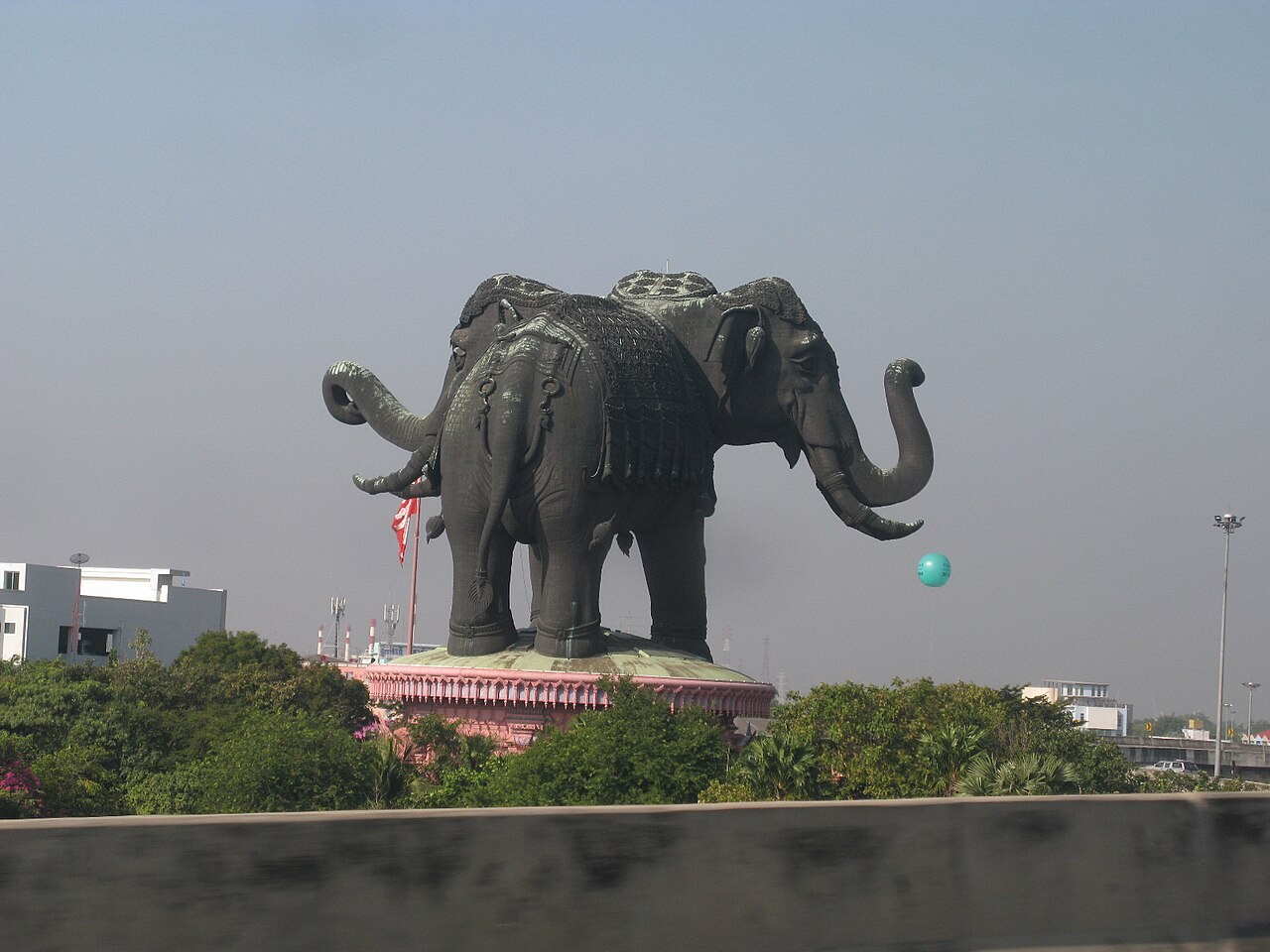
Erawan Museum, Bang Mueang Mai, Mueang Samut Prakan, Samut Prakan
Trip.com · Tickets and booking
Reference prices for international visitors, shown in US dollars on the English booking site.
Prices depend on your visit date, availability and selected option. The booking page shows the final price and inclusions.
View options and book on Trip.comAffiliate link: ThaiLiveNow may earn a commission if you book through this link.
You can visit while listening to Korean-language audio commentary.
See official audio guide information ↗The Suvarnabhumi Basement displays old objects and ceramics collected by the museum’s founder, Lek. Among the smaller pieces are Benjarong ceramics decorated in several colours, offering a different experience from the grand exterior of the building.
The displays are arranged across three realms: the underworld, the human world and heaven. After seeing the enormous elephant sculpture outside, you can go inside and explore the collection in the basement before continuing upstairs to the religious decoration.
Inside the circular building supported by the elephant is a stained-glass ceiling. Yellow, white, red and blue represent earth, air, fire and water, with zodiac imagery around the edge. After admiring the elephant from outside, step in and look up at the ceiling.
The pillars supporting the elephant’s four legs tell stories from different religions: the Buddhist Jataka tales, Vishnu, Guanyin, and the Christian stories of creation and Jesus. Small decorative pieces around the stairs use pottery fragments made in Amphawa and China. After looking up, take a closer look at the figures and patterns on the pillars and railings.
The heavenly realm is an exhibition space built inside the elephant’s body. A Buddha footprint and a Sukhothai-style Buddha image stand at the centre, with other Buddha images along the walls. The ceiling depicts the sun, planets, the Milky Way and asteroids, creating a cosmic scene unlike the stained glass below.
From the old objects in the basement, pass through the level representing the human world and arrive at the heavenly realm with its cosmic imagery. The exhibits and lighting change as you move between levels. Outside, the garden has sculptures of mythical creatures and is a pleasant walk after seeing the interiors.
The surrounding garden features trees from Thai literature and sculptures of mythical creatures, making it worth a walk after the indoor galleries. Garden admission, flowers, incense and lotus flowers are included with the ticket. Audio guides are available in Korean as well.
The route to the celestial level inside the elephant’s body is divided between an elevator in the left leg and stairs in the right leg.
Yes. The three-headed elephant contains an exhibition space representing heaven. You can see a Buddha footprint, a Sukhothai Buddha image and a ceiling depicting the cosmos; the lower level has the collection, stained glass and pottery-fragment decorations.
There is a lift inside the elephant’s left leg and stairs inside its right leg. Both lead to the heavenly-realm exhibition inside the elephant.
Yes. Audio guides are available in Korean, Thai, English, Chinese and Russian.
No. They are separate attractions run by the same organisation. Erawan Museum presents a collection, religious art and a garden inside and around the giant elephant sculpture. Muang Boran is a large open-air museum recreating architecture from across Thailand.
Sources checked:
Sharing image credit: nakhon100 / Wikimedia Commons · CC BY 2.0