The Bridge Over the River KwaiThe Bridge Over River Kwaiสะพานข้ามแม่น้ำแคว

Kanchanaburi · Second World War railway history site

The Bridge Over River Kwai is a railway bridge crossing the Kwai Yai River in Kanchanaburi. It is a place to consider the history of the Thailand–Burma Railway during the Second World War, the wartime losses and the bridge’s postwar restoration.

If you know the name from the film The Bridge on the River Kwai, you can see the actual railway bridge on the riverfront in Kanchanaburi. Trains still use it. Viewing the bridge from the riverbank and taking a train are separate activities. On the bridge, follow train operations and railway staff instructions.

Location and getting there

The pin marks the place, not necessarily its entrance, ticket office or vehicle drop-off point.

Address

Maenam Khwae Road Tha Makham Mueang Kanchanaburi Kanchanaburi 71000

Set the railway bridge in Kanchanaburi as your destination

The address is Maenam Khwae Road, Tha Makham. Search for The Bridge Over River Kwai, Kanchanaburi on your map. If you want to visit the bridge, set the riverside location as your destination; for a train journey, go to the station.

What can you see?

The wooden bridge in the film and the real railway bridge differ

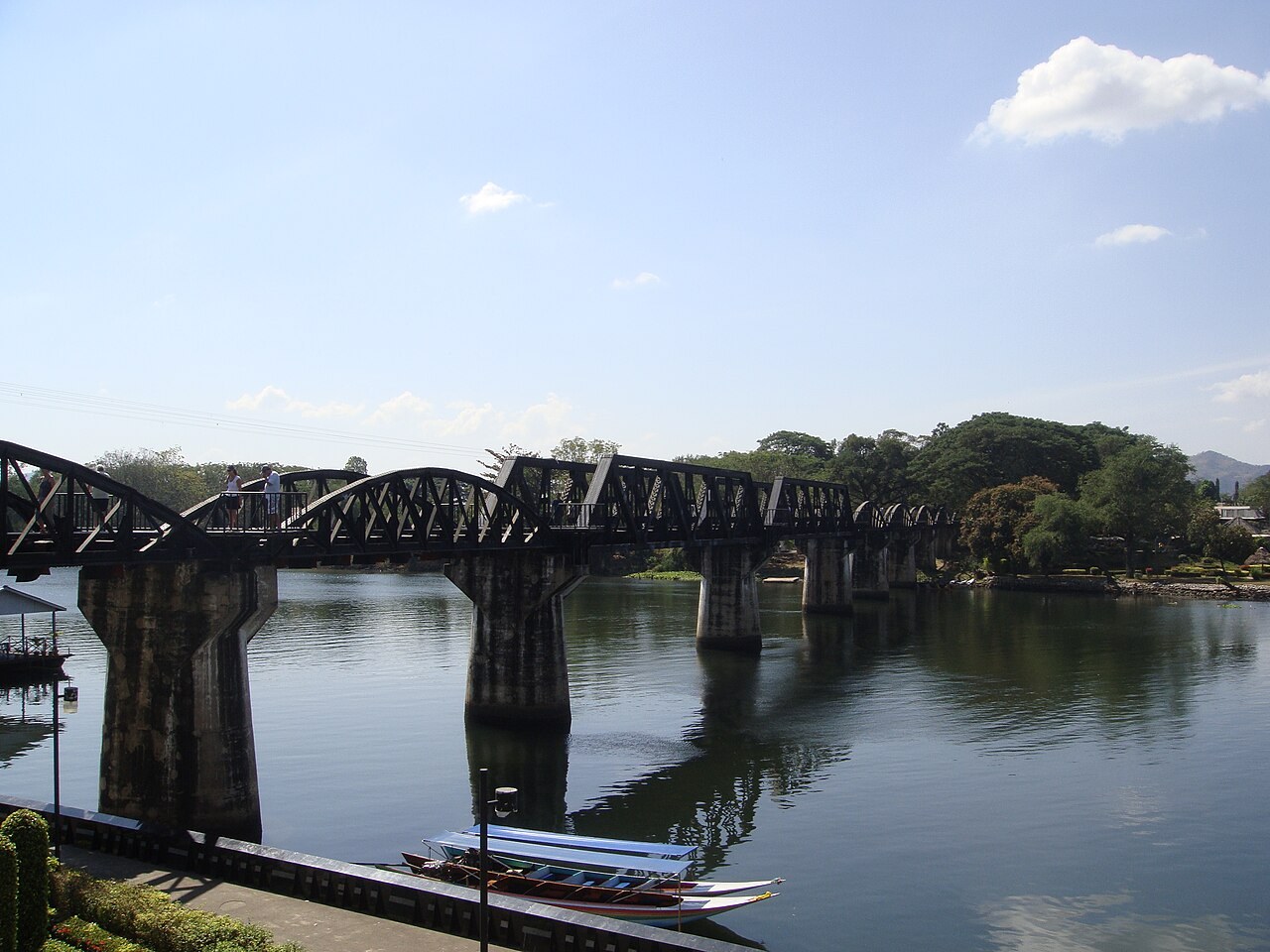
The 1957 film The Bridge on the River Kwai is a fictional story set against railway construction. The large wooden bridge shown in the film looks different from the steel bridge in Kanchanaburi. The bridge beside the river today is part of the real Thai–Burma Railway, built by prisoners of war in 1942–1943.

Bombing during the war destroyed parts of the line, and the damaged bridge was repaired in 1946. What you see today is therefore not entirely unchanged from the wartime structure. Look at the arches across the river and the sections repaired after the war, keeping the film’s plot separate from the railway’s actual history.

See the railway bridge from the riverbank or take a train

From the riverbank, you can see the full steel bridge across the water. Walking across is also described as possible when access is permitted. The view of the steel structure from nearby differs from its long outline seen from across the river.

If you want to take a train, plan that as a separate railway trip from visiting the bridge. The Tham Krasae cliffside section is elsewhere. On the bridge, follow train operations and railway staff instructions first; do not block the tracks to take a photo.

Learn more about the railway’s construction

After seeing the bridge, you can also visit Kanchanaburi War Cemetery and the Thailand–Burma Railway Centre to learn more about the prisoners and labourers. The railway center is across the road from the cemetery and presents the history of railway construction.

The bridge, museum and cemetery are separate places rather than one attraction covered by a single ticket. See the structure and riverbank at the bridge, then learn about the construction and the people involved at the exhibition. The cliff railway section at Tham Krasae is another separate destination.

Before you visit

Follow on-site controls while on the railway

Follow train operations and railway staff instructions first. Do not occupy the tracks to photograph a train or move into an area where access is not permitted.

Frequently asked questions

Is the Bridge on the River Kwai the wooden bridge from the film?

The film features a fictional wooden bridge, while the bridge visitors see is steel. It is part of the Thai–Burma Railway built using prisoners of war in 1942–1943, and it was repaired in 1946, so not every part remains in its original wartime form.

Are the bridge and Tham Krasae cliff railway in the same place?

No. The bridge crosses the Khwae Yai River near Kanchanaburi town, while the Tham Krasae cliff railway is elsewhere. Visiting the bridge and taking a train are also separate plans.

Can I walk across the Bridge over the River Kwai?

Walking across the bridge is possible when permitted, but it is an active railway. When a train approaches, leave the tracks as railway staff direct.

Sources checked:

Official sources · 2

Sharing image credit: Ninini / Wikimedia Commons · Public domain (PD-self)