Wat Chedi Luangวัดเจดีย์หลวง

Chiang Mai · Old City temple with a large brick chedi

You have reached Wat Chedi Luang when you come upon the large brick chedi with its broken summit in the middle of Chiang Mai’s Old City. Its broad base and naga sculptures along the stairs give a sense of the scale of this old structure, quite different from a gleaming golden tower.

This temple brings together a large chedi holding the history of the Lanna Kingdom and halls that are still in use. First look at the chedi from a little distance, then go closer to see its base and details. Continue to the Lanna-style halls still used today to see how historic architecture and active places of worship share the same grounds.

Location and getting there

The pin marks the place, not necessarily its entrance, ticket office or vehicle drop-off point.

Address

103 Phra Pokklao Road Mueang Chiang Mai, Chiang Mai 50200

Find it in the center of the Old City

The address is 103 Phra Pokklao Road in the center of Chiang Mai’s Old City. Set Wat Chedi Luang, with its large surviving brick chedi, as your destination.

Essential visitor information

Opening information
08:00–22:00
Admission information
50 baht

What can you see?

Mount Meru at the heart of old Chiang Mai

Wat Chedi Luang is said to have been begun in 1391 by King Saen Mueang Ma in memory of his late father. “Luang” means “large” in the northern dialect. The name points to a large chedi, but it is also interesting to consider why the tower stands at the heart of the city.

The Tourism Authority explains that kings of the time believed the dynasty would prosper if they built a large tower at the center of the city, modelled on Mount Meru at the center of the Buddhist universe, with temples in the eight directions. From in front of the broad base, you can think about the center of the old city as well as the brick ruin itself.

A collapsed summit and restored brick structure

The upper part of the chedi was damaged in an earthquake in 1545 and later repaired, according to the historical account. Rather than having a complete spire rebuilt, the site lets you imagine the tower’s former scale from the bricks that remain.

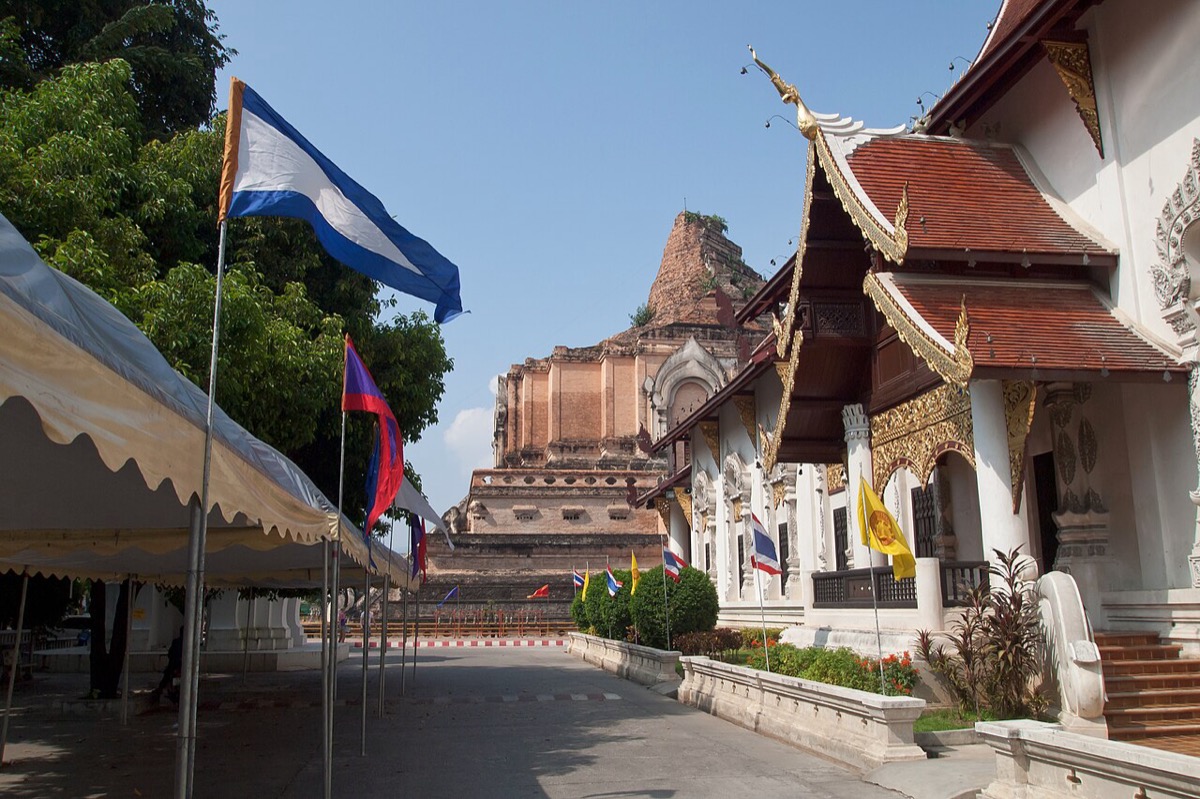
From a distance, you can see the outline with its broken upper section; up close, the layered base and brick surface stand out. If you want to take in the surviving architecture, look at it from more than one side instead of photographing it from a single spot.

Five-headed naga and a Lanna hall

Eight sculptures of five-headed naga line the base and stairs of the large chedi. After looking up at the collapsed top, turn your attention to the lower part: the surviving sculptures give a sense of the tower’s original scale and decoration.

The Lanna-style main hall in the grounds has a different roofline and materials from the brick tower. Seeing a tower whose summit was damaged in an earthquake alongside a worship space still in use is one of the site’s distinctive features. Follow on-site instructions about which halls are open to visitors.

Before you visit

Recommended clothing for visiting the temple

Visitors of all genders are advised to wear clothing that covers the shoulders and knees. A sleeved top with long trousers or a skirt that covers the knees is a practical choice. Please dress modestly rather than wearing a sleeveless top or short bottoms.

Frequently asked questions

Why is the top of the chedi broken off?

The upper part of the large brick chedi was damaged in the 1545 earthquake and later repaired, leaving the outline you see today. Its broad base and surviving layers of brick give a sense of how large the tower once was.

What can I see besides the chedi?

You can see eight five-headed naga sculptures on the base and stairs, as well as a Lanna-style hall still used as a place of worship. Compare the collapsed ruin with the temple building still in use within the same grounds.

Sources checked:

Official sources · 2

Sharing image credit: Vyacheslav Argenberg / Wikimedia Commons · CC BY 4.0