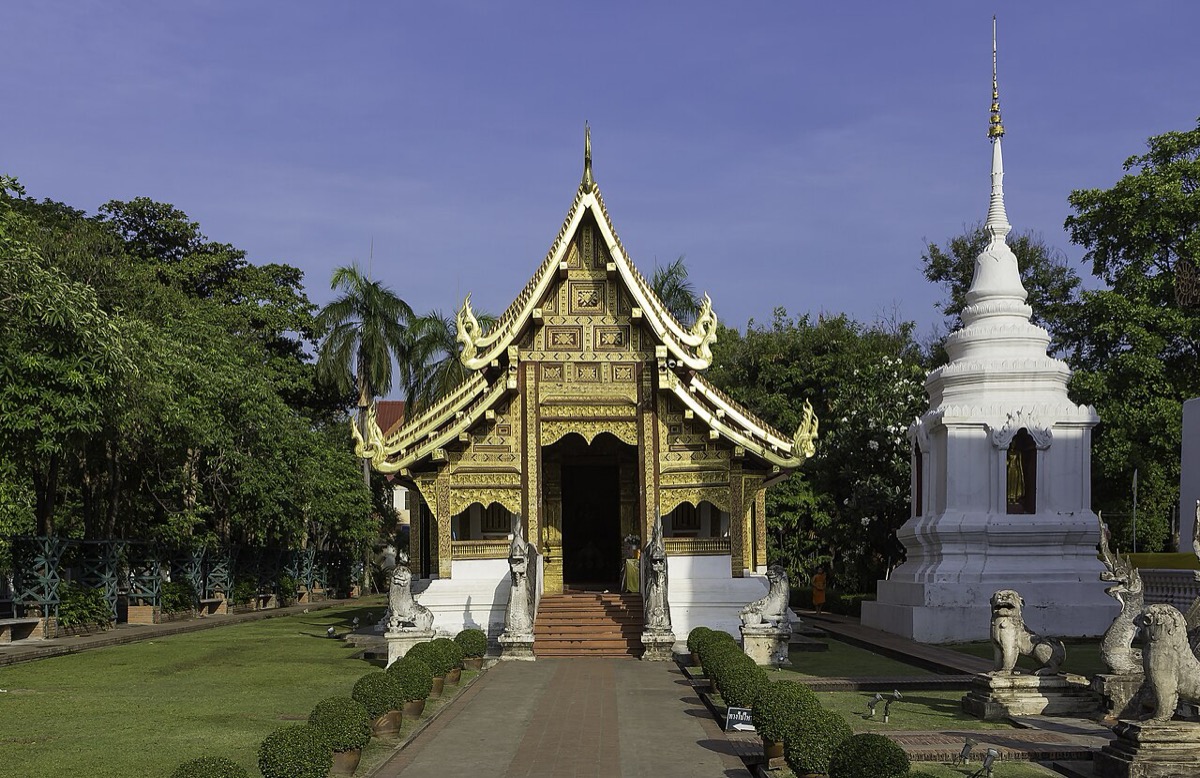
The Phra Singh Buddha and story murals in Lai Kham Viharn
Inside the grounds, Lai Kham Viharn houses the Phra Singh Buddha, also known as Phra Phuttha Sihing. After paying your respects, look at the walls: the north side tells the story of Suwannahong and the south side the Golden Conch. The rear wall depicts Buddhas of the past.
The paintings go beyond Buddhist themes. They also show clothing, architecture and everyday life at the time, so even visitors unfamiliar with the stories can take their time looking at the figures and street scenes. Please avoid blocking the way for people who are worshipping.
A temple founded in 1345 and murals from a later period
Wat Phra Singh was founded in 1345 by King Pha Yu of the Lanna Kingdom. It was first called Wat Li Chiang Phra; it became known by its present name after King Saen Mueang Ma brought the Phra Singh Buddha image from Chiang Rai. The approximately 50-meter golden chedi and the viharn housing the image show how the royal temple and its object of worship are connected.
The murals in Lai Kham Viharn are thought to have been painted during renovations in 1863. The Suwannahong and Golden Conch stories are attributed to different painters. Compare how the figures and scenes are depicted on the two walls of the same viharn.
The Phra Singh Buddha procession during Songkran
During Songkran, a tradition carries the Phra Singh Buddha on a special platform through Chiang Mai. The image usually worshipped inside the viharn is brought out into the city for the New Year festival. The tourism authority describes events between 13 and 15 April, but check the announcement for the year you plan to visit for the actual procession details.
Outside the festival period, visit Lai Kham Viharn to see the Buddha image and murals, then explore the golden chedi outside. Keeping the regular worship space and the festival procession distinct helps you know what to expect on different dates.