
Is it a restaurant that was listed by UNESCO?
No. What was listed is the knowledge of making Tom Yum Kung and the related food culture. It does not mean that any restaurant has been certified.
Tom Yum Kung · ต้มยำกุ้ง
Try Tom Yum Kung, a hot broth that rises with the scent of lemongrass and kaffir lime leaves. It is Thailand's well-known soup, simmered with shrimp until sour and spicy. With each spoonful you get a sour taste, heat and herbal aroma together. If you are eating with friends or family, order rice and share a pot of Tom Yum Kung.
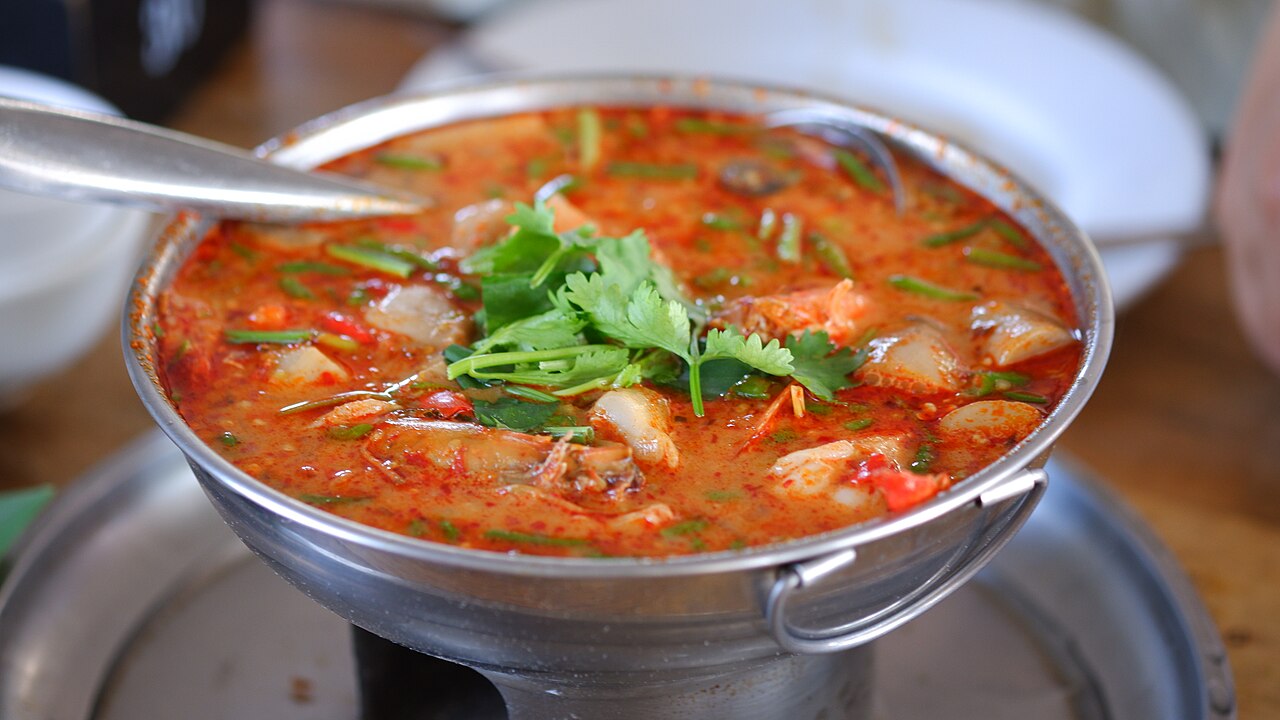
Sourness and heat are added to a broth that has taken on the flavor of shrimp. Lemongrass, galangal and kaffir lime leaves are the ingredients that give Tom Yum Kung its distinctive aroma. There are clear versions and richer versions, so dishes with the same name can taste a little different.
If you cannot eat shrimp, choose another dish instead of Tom Yum Kung.
Tom Yum Kung is a dish whose recipe has been passed down in homes and communities. The cooking knowledge and culture behind it were added to the UNESCO Representative List of the Intangible Cultural Heritage of Humanity in 2024. It is not a certification for a particular restaurant. It recognizes the culture handed down by people who make and share the food.
No. What was listed is the knowledge of making Tom Yum Kung and the related food culture. It does not mean that any restaurant has been certified.
No. Kung means shrimp, and there are tom yum soups made with other ingredients. Looking at the name that follows tom yum on the menu helps you choose the main ingredient.
If you want to read more about the food and the regions behind it, these sources are a good next step. Ingredients and cooking methods can differ from one place to the next.
Sharing image credit: Vee Satayamas · CC BY 2.0