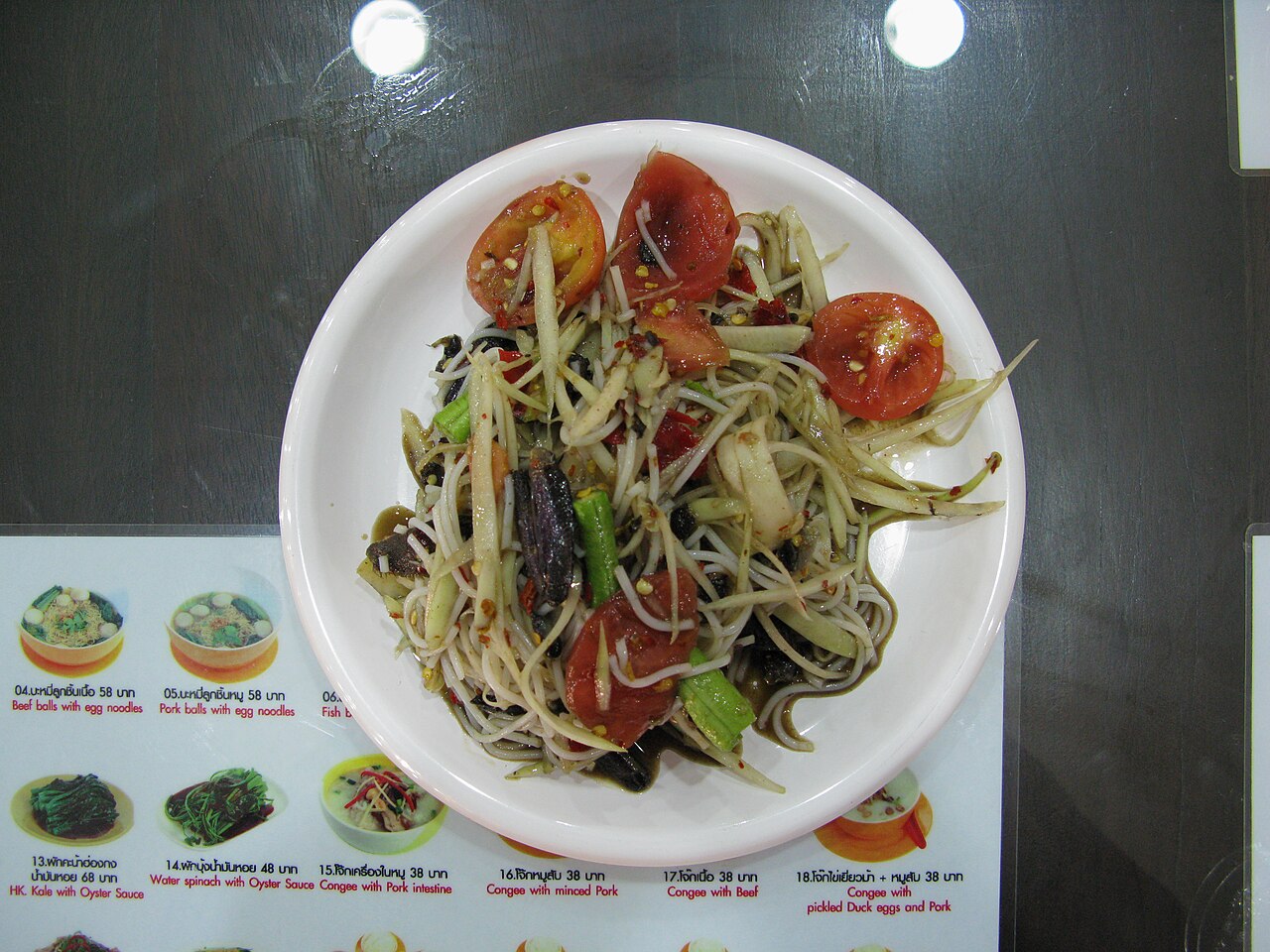
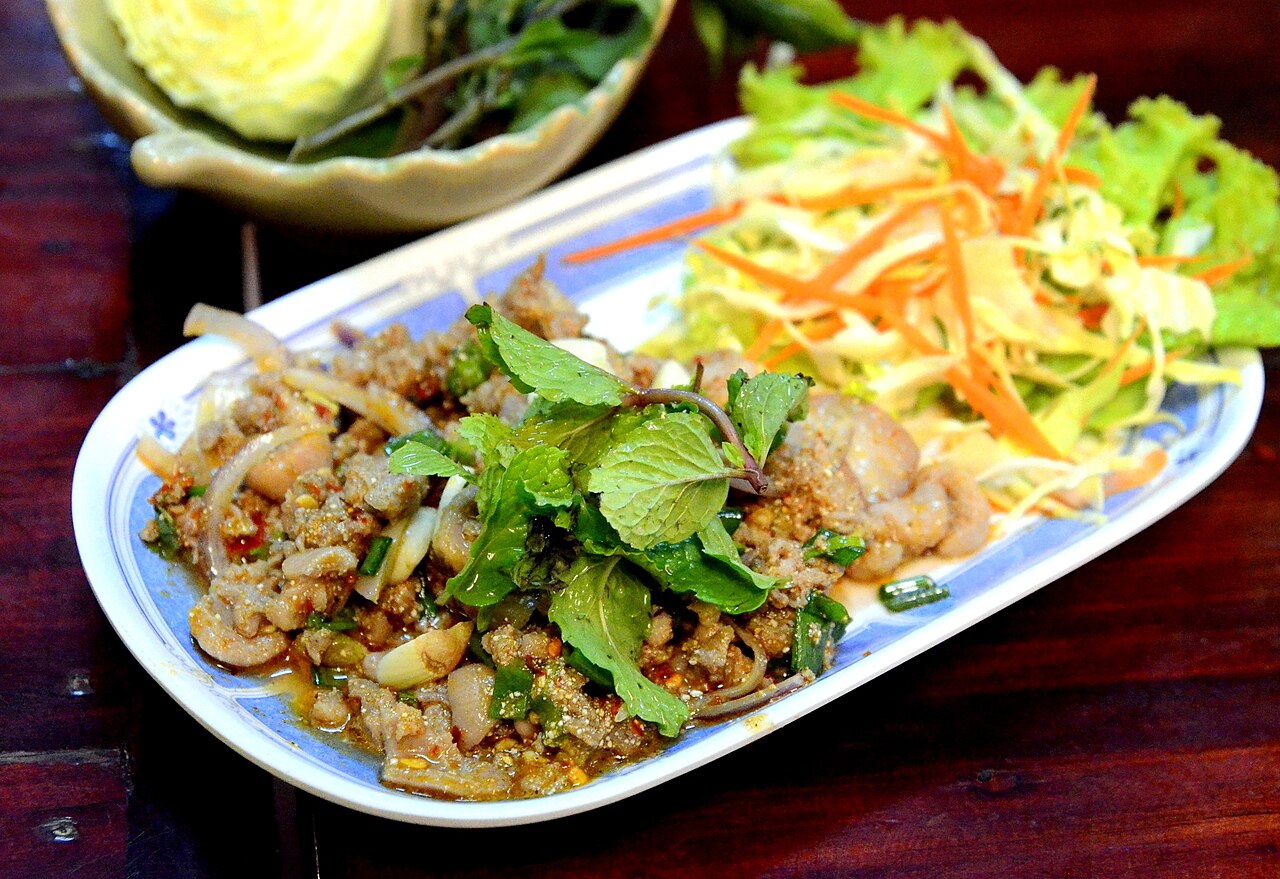
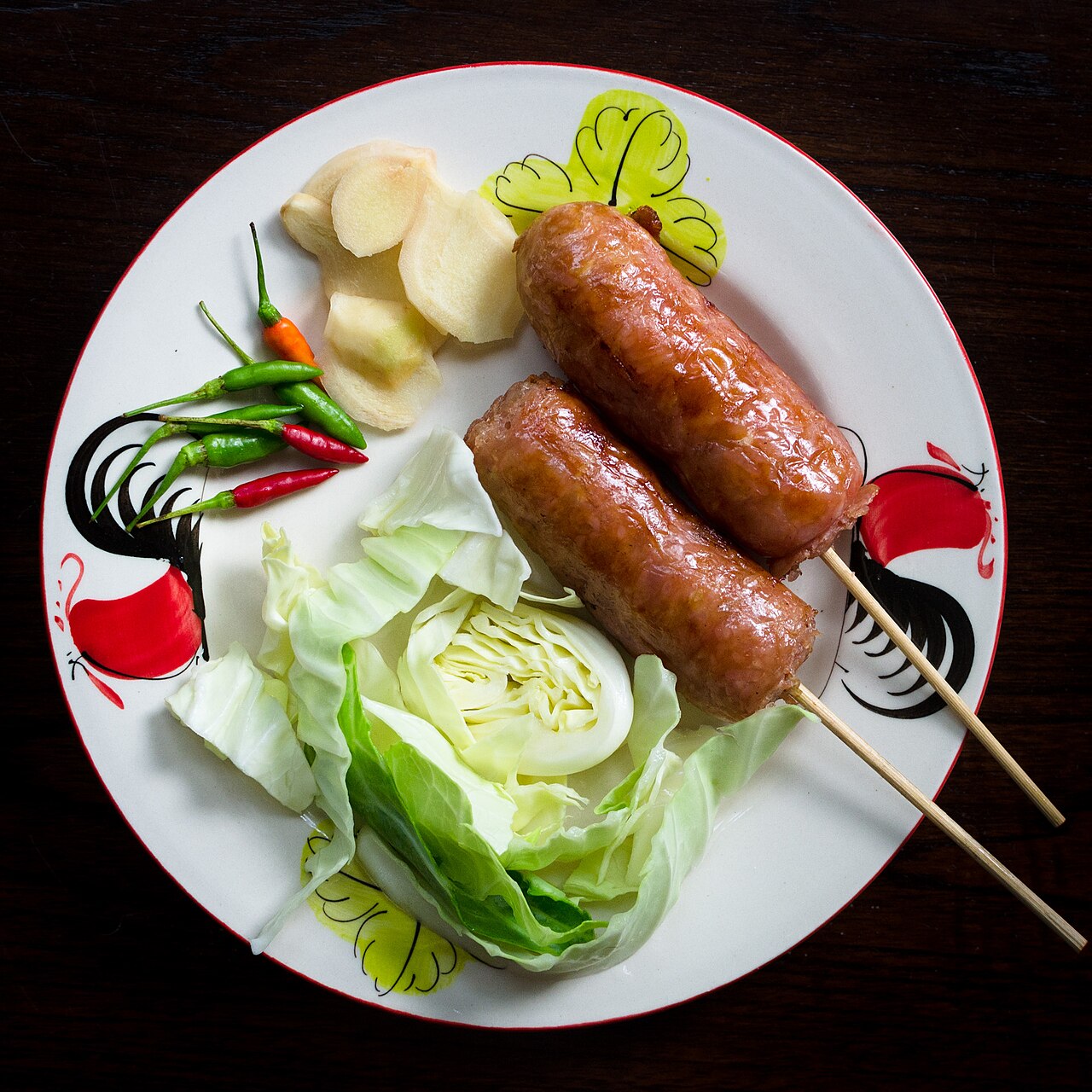
In Khon Kaen, enjoy Isan food with som tam and larb alongside sticky rice. Crunchy papaya, savory meat and a tangy dressing can be shared in a single meal. Also look at the fermented sausage sai krok Isan and au pla, a freshwater fish curry. Even within the same region, these dishes differ in ingredients and in how they are eaten.
Choosing a meal in Khon Kaen When you eat som tam or larb, order sticky rice with it. If the aroma of fermentation is new to you, first ask whether the som tam is made with pla ra. On a day when you want fish instead of meat, look at au pla.
The food culture you will find here
In Isan, sticky rice and fermented seasonings are used widely. Som tam is made by pounding papaya, larb uses herbs and toasted rice powder, and a sausage ferments rice and pork, so the ways of building flavor vary. This guide also introduces au pla, a local dish of Khon Kaen that uses freshwater fish.
Som tam, larb and sai krok Isan are eaten in many parts of Isan. Au pla is a dish introduced as a local specialty of Khon Kaen.
Dishes to try in Khon Kaen
Pick a dish you are curious about. Each guide explains how it tastes and what to eat it with.
Sour and spicy seasoning meets the crunch of papaya. In versions with pla ra, a fermented fish seasoning, you can also taste a fermented aroma. Even with the same som tam, the taste changes with how the seasoning and chilies are used.
The tang of lime and the aroma of herbs are joined by the nutty flavor of toasted rice powder. The seasoning is evenly mixed into the minced meat, so it is good to eat a little at a time with sticky rice. The taste also changes with the meat used, such as pork, beef or duck.
Its traits are the savory pork and the tang that comes from fermentation. The strength of the sourness depends on the degree of fermentation and the cooking. The raw chilies served with it can be hot, so eat them separately, a little at a time.
It is a curry that adds heat and saltiness to freshwater fish. You get a different meal from foods like som tam, where you eat crunchy vegetables, or meat dishes such as larb. Eat a little at a time with rice.
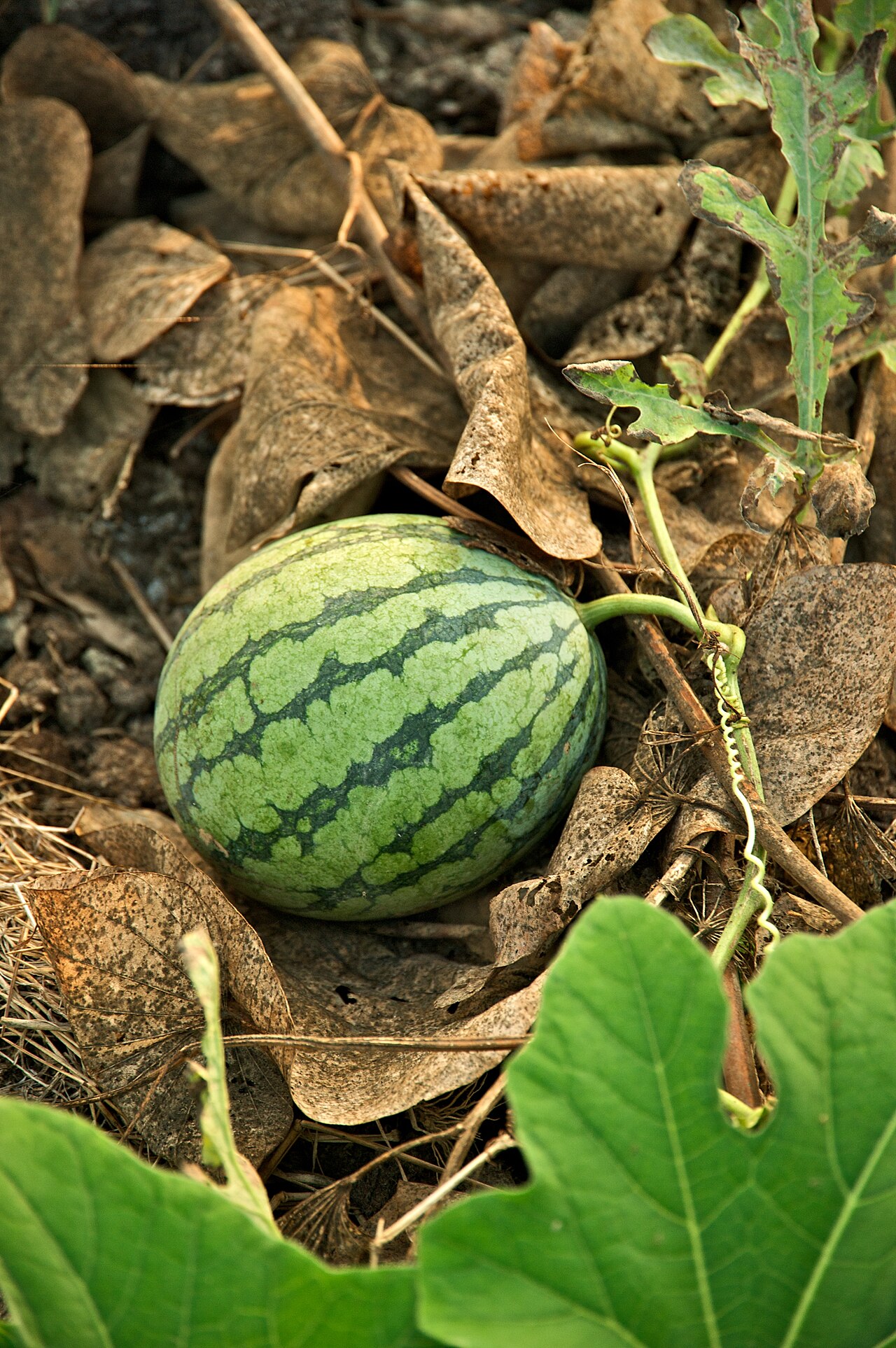
This is a reference photo showing what a watermelon looks like. It is not limited to photos of the Thai growing regions or varieties described in the text. Taiwan 2009 Tainan City Organic Farm Watermelon FRD 7962 · Fred Hsu (Wikipedia:User:Fred Hsu on en.wikipedia) · CC BY-SA 3.0 Resized and partly cropped for display · Photo provided under CC BY-SA 3.0Available year-round
It is a crunchy, juicy fruit. Fresh fruit and taeng mo pan, blended with ice, give you different textures.
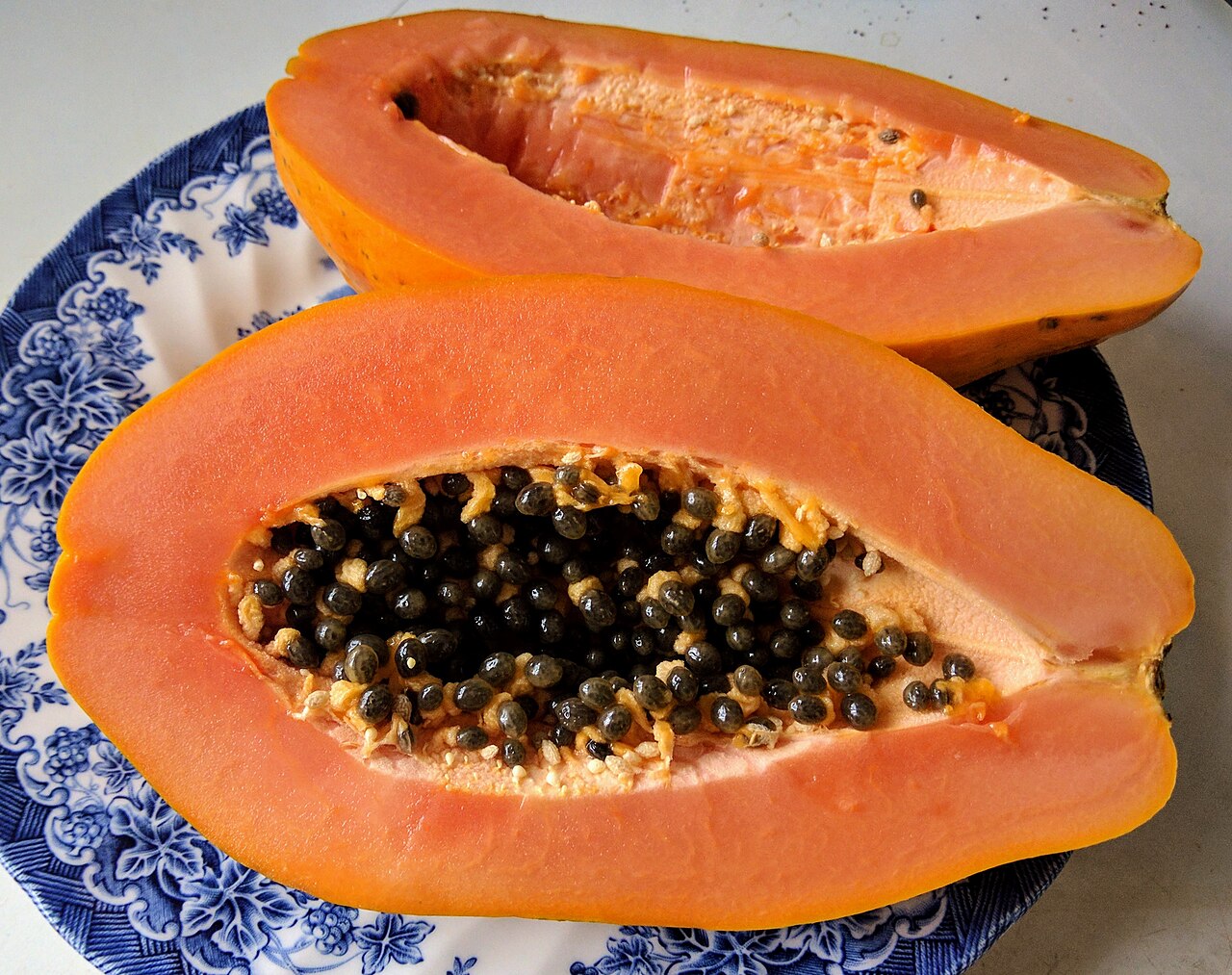
Watermelon: season, flavor and how to eat it →This is a reference photo showing what a papaya looks like. It is not limited to photos of the Thai growing regions or varieties described in the text. Papaya cut half · Maksym Kozlenko · CC BY-SA 4.0 Resized and partly cropped for display · Photo provided under CC BY-SA 4.0Available year-round
Ripe papaya is a fruit where you enjoy the soft flesh. Unripe papaya is also used as an ingredient in dishes, so the texture is different from eating it as fruit.
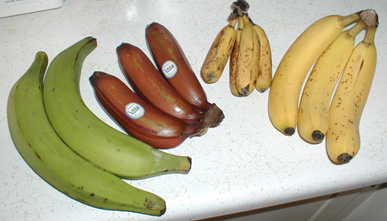
Papaya: season, flavor and how to eat it →This is a reference photo showing what a banana looks like. It is not limited to photos of the Thai growing regions or varieties described in the text. Bananavarieties · TimothyPilgrim · CC BY-SA 3.0 Resized and partly cropped for display · Photo provided under CC BY-SA 3.0A fruit available year-round
The sweetness and the firmness of the flesh vary with the variety and ripeness. It helps to tell apart bananas eaten when yellow and ripe from bananas used for cooking.
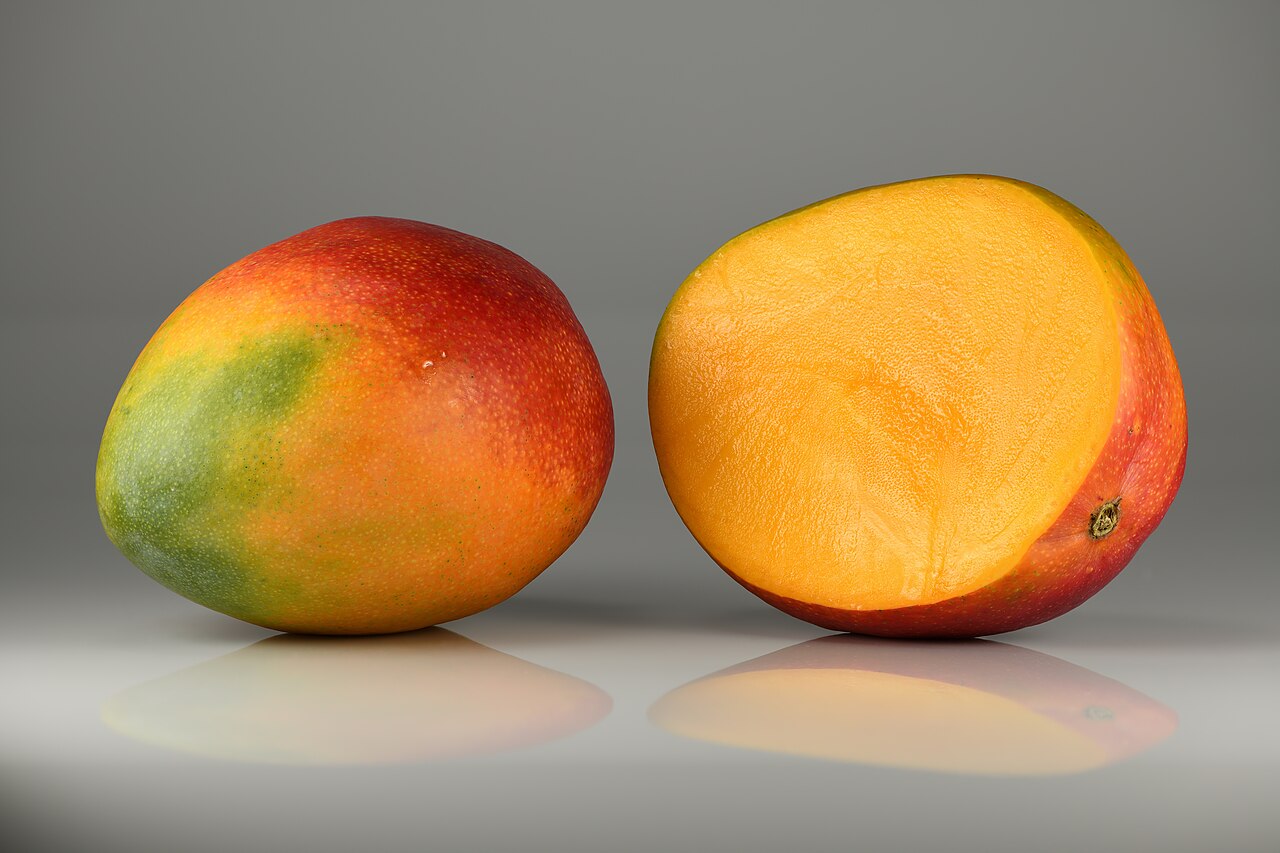
Banana: season, flavor and how to eat it →This is a reference photo showing what a mango looks like. It is not limited to photos of the Thai growing regions or varieties described in the text. Mangos - single and halved · Ivar Leidus · CC BY-SA 4.0 Resized and partly cropped for display · Photo provided under CC BY-SA 4.0Main harvest Mar–May
Ripe mango is soft and sweet. Some varieties of green mango are eaten for a different texture from ripe ones, so you do not need to assume that every green mango is unripe.
Som tam, larb and sai krok Isan are eaten in many parts of Isan. Au pla is a dish introduced as a local specialty of Khon Kaen.
How do I choose what to eat the first time?
When you eat som tam or larb, order sticky rice with it. If the aroma of fermentation is new to you, first ask whether the som tam is made with pla ra. On a day when you want fish instead of meat, look at au pla.
If you want to read more about the food and the regions behind it, these sources are a good place to start. Ingredients and recipes can vary from one restaurant to the next.